Showing posts with label USBC. Show all posts

Tuesday, November 29, 2011

5th Uganda Barista Championship


Barista Jonathan Ddumba presents to Head Judge Clare and sensory judges Miriam, Richard, Evelyn and Emma.

A few weeks ago, I received a call from David Roche of the Coffee Quality Institute. He was calling to ask me if I would be willing to go to Kampala again to be the head judge and trainer for their barista championship. He said they had been asking for me personally. An honor.

Not too long later, I found myself boarding yet another trans-Atlantic and trans-African flight to Uganda where we would be holding two days of barista workshops, one day of judges training and then three days of competition.


Surrounded by competitors for a "photo op."

Last year, I thought it was a bit odd to have a barista training literally hours before the competition. I mean, how much could the competitors digest, make changes and (perhaps) improve right before the championship. But I was tasked to do a job and I did what I could and shared as much information as possible on how to compete, methods of flow and even ways to improve your scores.

While I was at first a bit skeptical, I'm now a fan of. One of the greatest problems in barista competitions is the disconnect between competitor and judge. One person within the USBC once remarked that the WBC Rules and Regulations are the only training manual you would need, but the interpretation of those rules can vary wildly from judge to judge and competition to competition. Add to that the WBC's reluctance, or outright refusal, to provide materials and information to illuminate these areas and you've got a situation where only a small percentage of competitors have the ability to truly be competitive.


Joseph Kyeyune rocks it to the Finals.

Of course, the pundits will argue that it's a "level" playing field and that one doesn't need to have money to win. These are also the same people who never comment that those who win have also spent time training with the likes of World Barista Champion Fritz Storm - whose rates are in the thousands. So much for the average competitor...

Which is what the majority of the competing world is comprised of: average competitors trying to learn finer points of our craft and doing a better job in the world. Everyone wants to do well and win a trip to Vienna, but not everyone has the resources available to them. And that's what the barista workshops are designed to do: bring the information to the competitors before the competition when they will have some time to perhaps make changes and incorporate them into their performances.


Daphne awaiting lunch.

And that's what I see here in Kampala. Lots of passion. Lots of interest and the desire to do well and improve. So, after two days of instruction, we're off to the races.

The competition itself went very smoothly. With a resident WBC Certified Judge, the duties of Head Judge were split between myself and Clare - relieving me of the intensity that comes from Head Judging 26 competitors non-stop.

As with any competition, we want to judge the competitors on the same level at the rest of the world. Meaning that a score of "5" is equivalent to a "5" elsewhere in the world. What we don't want is a "5" in Uganda to mean a "3" at the World Championship. We want a realistic evaluation according to world standards, which is a difficult proposition when you're trying to wrangle local judges who've never seen competition before (or maybe never outside of their country).

In my world, there's a bit of pushing, prodding and even outright challenge to judges' evaluations. Scores go up, scores go down, but always with lots of information, discussion and detail as to why. The hardest part is getting the judges to write enough information on their sheets to be helpful to the competitor later.


Finalists Emma Katongole, defending champion Mark Okuta, two-time champion Roberts Mbabzi and Joseph Kyeyune.

As the competition winded down and the finalists announced, I looked over the scores compared to last years competition and was pleasantly surprised. The average scores had improved considerably. Only one disqualification this year compared to four in 2010. And the finalists all performed very strongly - one could easily see the improvements from the previous year.

When the Finals got rolling on the last day, the excitement was palpable. The Defending Champion Mark Okuta versus the former two-time champion and a slate of some very tough competitors. Quickly, four of the finalists pulled away from the field. Nearly 100 points would separate the fourth and fifth positions. While Simon's cultural smoked milk electrified the audience, Mark's tour of the coffee bean was fascinating and Salim's dazzling performance rocked, it was the former two-time champion, Roberts Mbabzi who came a calling to reclaim his title as Barista Champion of Uganda.


They said I was looking "smart" at the barista awards party.

Many hours later, after the partying was over, some of the competitors came to me to ask how they had done. What they really wanted to know is: how could they have lost? And: how did Roberts win again? I understood their question because it's common amongst those who don't take the title. There's always the wondering if the competition isn't somehow, fixed. Especially for someone who always seems to win.

I sat down with them and pulled up the electronic scoresheets that I keep on file as the Certifying Judge for a national championship. And I compared their scores. Even without the actual notes of the scoresheets, the scores tell a lot. The top four were very close. Each of them within striking range of the Champion spot. An improvement in this set of espressos, or an improvement in your professionalism, plus a slight mistake on the part of the Champion could easily have switched positions. Even hitting an even 4.5 on cappuccinos taste balance could have scored you the title.

In the end, I discussed it with them to show that there's nothing rigged about the competition. The scores reflect the performance. Maybe that one puck was off and you served it because it would burn time to redo the shot. That shot got you 1.5 in scores. Maybe it would be worth it to burn the additional 30 seconds to grab a 3.5 in scores? All things that have to be considered by the competitive barista.

I think they all left understanding the process a little bit better. Perhaps still not happy that they "lost" but at least with a better understanding.

And if I can leave a place with a better understanding of our craft, then it's been a worthwhile trip.

Wednesday, April 06, 2011

Coffee Obsessive

I'm currently stuck in Mexico City after a mechanical problem with the airplane forced a two-hour delay, missing my window to connect on a flight back home to Baltimore. Granted, if I'm going to be "stuck" anywhere, Mexico City is about as ideal as it gets.

To my own surprise, this blog was mentioned in the article about me and my little company, Spro Coffee, in Baltimore. For those of you visiting us from the Washington Post: welcome.

I first was introduced to Martha Thomas about nine months ago in June 2010 where I received a phone call during my trip to London for the World Barista Championship. That's where the article you read in the Post all started. Over the next nine months, Martha and I would chat on a regular basis regarding the article and she came in several times to see just how we do what we do in our little shop in Hampden.

Martha joined us for a cupping with Joan & Ralph Gaston of Rusty's Hawaiian Ka'u Coffee where we sampled a range of coffees, including samples grown by Lorie Obra (Joan's Mom) - who is an amazing scientist turned coffee farmer on the Big Island. Martha later joined us in a demonstration on how we select a brewing method that "pairs" with a particular coffee. It seems that in the translation of the article, a little bit of both events were mixed together.

As with any article written over a long period of time, some details may have been a little jumbled with the passage of time. I wanted to take a moment to clarify some of the details:

- A visit to Anthony Rue's Volta Coffee & Tea in July 2009 was instrumental to the direction we decided to take Spro Hampden. Had it not been for Anthony, our approach of multiple brew methods throughout the day might not have happened. If anything, we might have ended up "cheating" like many shops in the country by batch brewing coffee during the morning "rush" instead of taking the time to prepare each cup by hand.

- Much of what we do is inspired by others. Almost nothing is truly original. From Ichiro Sekuguchi of Tokyo's Cafe de L'ambre to John Sanders of Origins Organic Coffee, Spike Gjerde of Woodberry Kitchen, Aki & Alex from Ideas In Food, and fellow baristas like John Lewis - all and more have had an impact on me and the way we approach and present our coffees.

- In the article I'm quoted as saying: "We have no loyalty to any one roaster." Honestly, I don't think I ever said that - especially since loyalty is something central to what we do and own approach to doing things. As a company, we're very loyal to our vendors. We maintain long-term relationships with all our vendors. A great example of this is Origins Organic Coffee. We've been buying their coffee since 2004.

What I did say is that we do not maintain roaster exclusivity with any one roaster. In the coffee business, the typical model is for a retail shop (like Spro) to purchase all their coffees from one coffee roaster. It's a limited way of doing business that is slowly eroding in these modern times (although one of our original six roasters, Counter Culture Coffee of Durham, NC recently told us that they would no longer sell to Spro for three reasons, one of which was that they were returning to the roaster exclusivity model).

Roaster exclusivity is simply ludicrous. It's akin to walking into your local pub and only finding one brand of beer or alcohol. We are unable to do business with companies that insist on roaster exclusivity and we're very appreciative of the companies who started with us and believed in supporting our approach - and those companies are:

Origins Organic Coffee - Vancouver, BC
Barefoot Coffee - San Jose, CA
Ecco Caffe - Santa Rosa, CA
Stumptown Coffee - Portland, OR & New York City
Intelligentsia Coffee - Chicago, IL

- In the article, Ryan Jensen (owner of Peregrine Espresso in Washington DC) cautions about claims of singularity. While our model of multiple roasters, multiple coffees paired to multiple brewing methods, made by hand, day-in and day-out, is still the only one in the industry, I certainly hope that this anomaly is short-lived.

Seriously, Spro Hampden can only make so many coffees per day and we can only impact a small segment of the coffee drinking public. For our notion of quality coffee prepared without compromise to be tasted by the larger public, more shops have to take our approach. We cannot and do not want to be the only kid on the block serving our kind of coffee.

However, to do what we do takes a certain level of commitment and skill. Ryan Jensen has both of those and with his opening of a second Peregrine in the coming months, I'm hoping we'll see a more in-depth approach to their coffee program - because I think he's the best coffee operator in The District.

- The article mentions my judging experience. While I have judged barista competitions across North America, Central & South America, as well as Africa, I have not judged a competition in England. My visit to London last summer ended up with me as a spokesperson for Reg Barber Enterprises during the World Barista Championship.

From 2004-2007, I served as a volunteer director on the Executive Council of the Barista Guild of America. I have also served as a volunteer for the United States Barista Championship regional competitions and as a volunteer trainer for the Specialty Coffee Association of America. And in three weeks, I will serve again as a volunteer panelist speaking on multiple brewing methods in a cafe environment at the SCAA's annual trade show in Houston. I will be one on a panel with Anthony Rue (Volta), John Piquet (Caffe D'Bolla), Kyle Glanville (Intelligentsia) and Tracy Allen (moderator).

So, despite my criticism of the SCAA, I'm still willing to support and help out when I feel that I can lend something of value.

Well, that's about all I have. It's humbling to be written about in the Washington Post and I'm truly honored, but much of the credit goes to the people around me. My staff of baristas are some of the best baristas I've ever known and worked with, they ply our craft with humility and honesty in an unassuming manner absent of pretense and condescension. My non-coffee friends and family keep me grounded. My mentor, John Sanders, who has been instrumental in my learning of coffee and sense of duty to get involved in our industry. And many thanks to my friends in and around the business, without whom I never would have done what we do.

And of course, thanks to Martha Thomas for noticing and taking interest in what we do to take it to the Post. She's been fun and easy to work with and I wish her the best in her writing career. Same goes to the editors, staff and Marvin the photographer from the Post. Always professional and always easy to work with.

Thanks to all of them and thanks also to you for reading the Washington Post article and then this lengthy blog post (btw, I write about more than just coffee here). I hope you'll find your way to visit our little shop in Baltimore (or at least your local specialty coffee purveyor) where we look forward to making you a cup of coffee in a manner we hope you will enjoy.

Best regards,

Jay
Mexico City
6 Abril 2011

Saturday, February 19, 2011

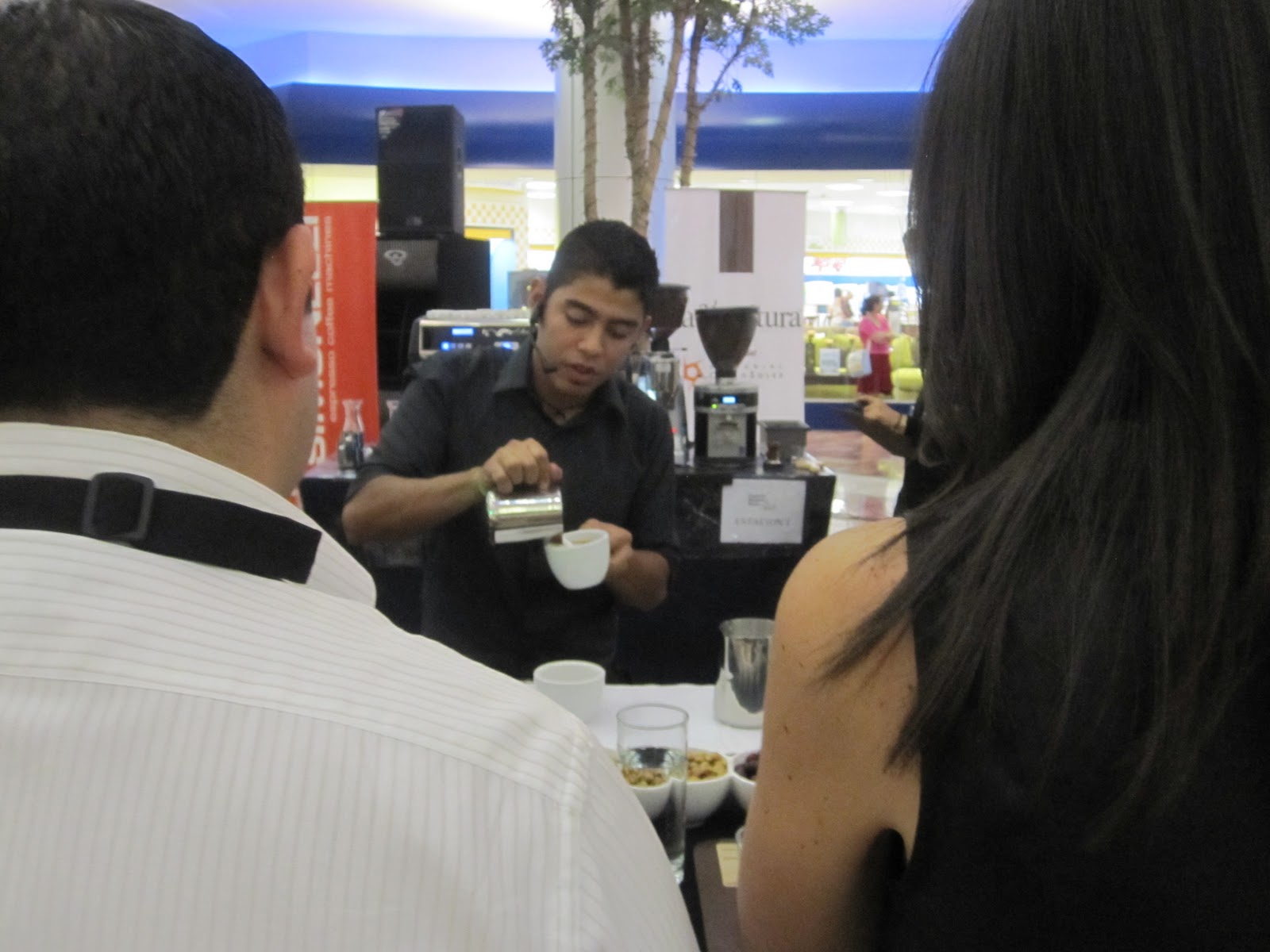
Campeonato Salvadoreno de Baristas, Los Finales


Guatemalan Barista Champion Jose de la Pena prepares a cappuccino for Judges Calibration.

To be honest, I probably could have judged the finals, but I certainly wasn't feeling 100% (more like 78%), and I had already named my alternate and Rob was going to Head Judge the finals. Originally we tossed a coin to determine the head judge slot but I really don't know why. I was going to let him do it regardless, mainly because I knew I would be head judging Nicaragua next week and it was important to him to head the finals. Add to that the fact that I was well on my way to being ill yesterday evening and I didn't want to judge the competitors unless I could give them my full 100%.

It's a good thing because all the judges were on top of their game and ready to do a great job.


Finals Head Judge Rob Tuttle reviews the calibration cappuccino.

Selecting the judges for the finals is a fun and curious exercise. I'm looking for the most consistent and most calibrated of our judging field. People who can evaluate quickly, consistently, fairly and to the rules. It's not an easy task - especially if it's your first time out, and we had some great people in the ranks.

The challenging part was the diversity of the competitors. Clearly, the most progressive performances were given by the Viva Espresso team. They were sharp and pushing the envelope. They've been involved in the El Salvador competitions for years and have paid very close attention to the trends in the progressive competitions around the world, like the USBC and the WBC. They signaled early on that they were going to push it to the limit and they didn't disappoint.


The Girls.

One of the most difficult things about judging is that you really don't want to field a team of judges that aren't qualified to assess the competitors they are evaluating. As a competitor in the United States, I've had that problem and I didn't want that to be the case here in El Salvador. For the finals, our judges had to be sharp and had to be on top of things. Going into the finals, I felt comfortable with our mix of experienced International Judges and national judges.

For lack of a better term, the more "advanced" competitors know the rules and they know the flow of the station with regards to their judges. They know what rules to exploit and which to burn. Some, like former WBC Sensory Judge Rodrigo Giammatei, will "play" with the judges to see if they are sharp enough to catch his nuances. It can be tricky work.


Jonathan Rodriguez does his thing.

But even experience as a WBC Judge doesn't guarantee you a win. Practice helps and the rumor was that Team Viva Espresso had been training for six months, with the last month dedicated solely to preparing for the championship.

Whether you're in the United States or at the World Barista Championship, the questions are always the same: why did those people win? Who do they know? Is the competition corrupted? And no doubt, those same questions would be posed here in El Salvador. It's the nature of the game.


Nice setup!

But when you're a judge, it's almost obvious. Those with the time and resources to practice and practice with focus and knowledge stand out. They don't necessarily win, but they stand out and increase their chances of winning tremendously.

In the end, the champion Alejandro Mendez was polished. Smooth, clean, confident and with a good disposition, as well as a very supportive company and team, I think he makes for a great champion to represent El Salvador at the World Barista Championship this June in Bogota.


The judges score espresso.


A large crowd supporting Viva Espresso.


Flor de Maria Gochez grinds coffee.


Creating Flor de Maria's signature drink.


Daniel Mendez aerating his espresso through a Venturi.


Tuttle watches.


Alejandro Mendez pouring cappuccinos tableside.


I think Rob is going stir-crazy.


Claudia wiped out.


The Sensory Judges calibrate.


Rodrigo Giammatei plays with his tech judges.


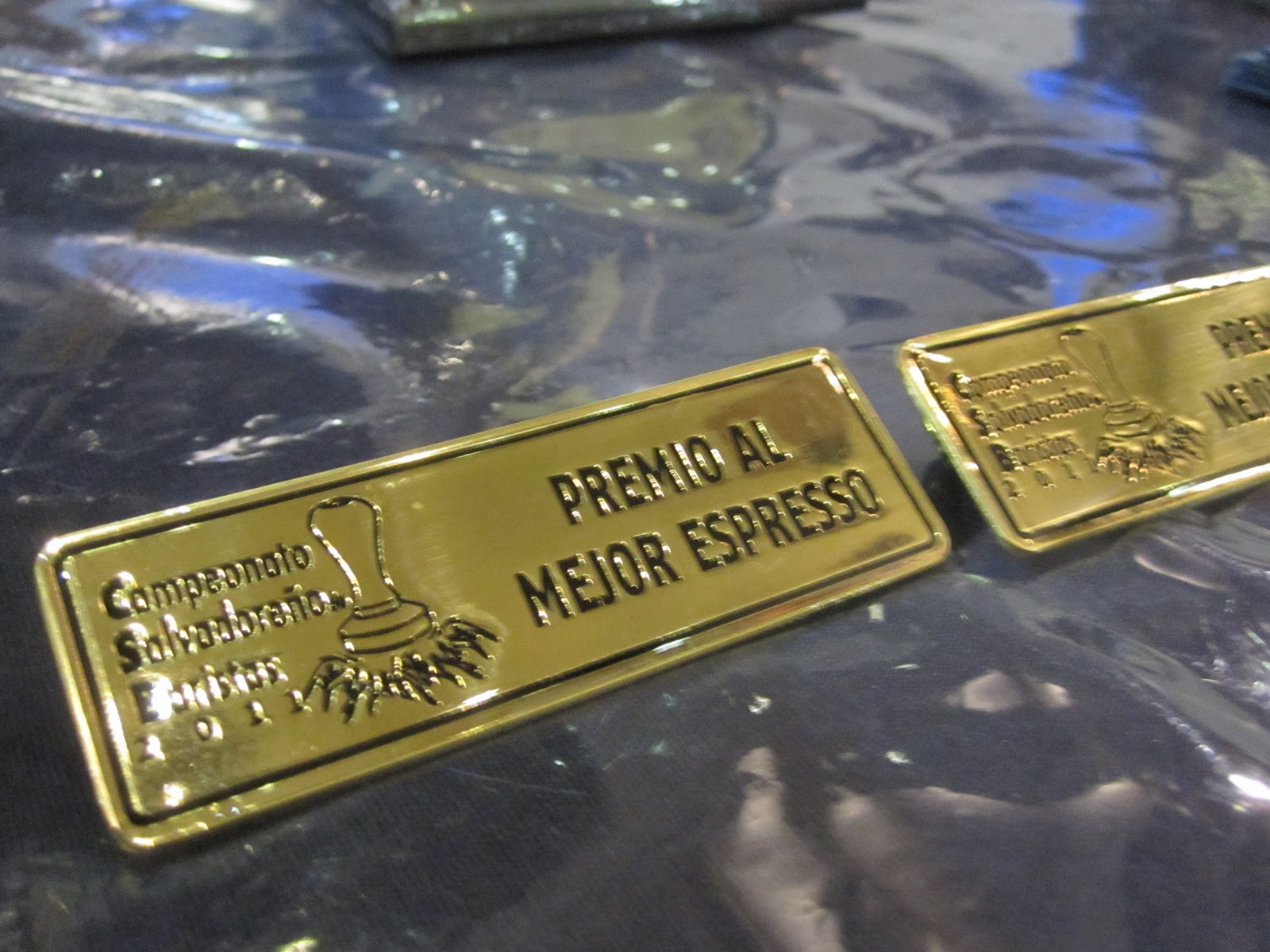
Pins for best drink categories. I like these.


Top Three Trophies.


Los resultados.


Alejandro with his trophy.


We stand with the new Barista Champion of El Salvador: Alejandro Mendez.

Friday, October 15, 2010

The Dark Ages of Third Wave


Once upon a time, forums were the means for open debate.

A buddy and I were discussing the coffee community the other day and how, if this is truly the "Third Wave" of coffee then we're certainly in that wave's Dark Ages.

Perhaps it's been a reflection of our nation's psyche but within this community, what was once open discourse has now turned to self-gratification and a growing sense of close mindedness. From around the time that I entered the community (about 2003) until 2007 there was a strong sense of community and discussion. Forums existed on the internet where coffee people could banter back and forth on different theories and really get into the mix.

All of this started changing around 2007-2008 when those who had once been simply the newbies to the industry started making their bones. A new leadership within the industry emerged under the flag of change and transparency, wrestling control away from the cronyism of the old guard. As time would bear out, this "new guard" would only differ in that they waved the flag of transparency and change. However, very little would actually change and much of that opacity would remain the same.

At the same time, the forums of old started losing their cache when the administrators showed their draconian ways and censoring the open discussion that was central to the community.

It's been all downhill from there.

Today, the "Third Wave" exists in a sense of darkness. Where there was once a community that discussed the issues and challenged each other, we now have a community that's comprised mainly of self-congratulatory posts and emanations through individual blogs or twitter tweets.

As a new generation of coffee professionals enter our ranks, they're left with people held to "God-like" stature - people who've developed an aura that they should never be questioned because they're, essentially, Gods of Coffee. There no longer exists that forum where those gods would be questioned and challenged. Now they simply issue their dictates from upon high, whether on top of their blogs or from the chair of coffee organizations.

Dark Ages, indeed.

Sunday, October 10, 2010

Put Them In The Iron Maiden

A recent article on CNN.com has come at a poignant time.

Once upon a time, there was a blogger in the coffee blogosphere who actually had journalism chops and actually took the time to pen a series of post critical of the events that happened within our niche of the coffee industry.

Sadly, that time has passed and that person decided that all the bullshit directed his way for offering a critical view on the industry just wasn't worth it. Afterall, it's not his life and he wasn't being paid to do it.

Meanwhile, the coffee industry is inundated with non-reporting, fanboys, masquerading advertising, non-starters or mindless love-fests.

For quite some time, I've lobbied Sarah Allen, editor-in-chief of the international industry publication Barista Magazine to take a harder look at our industry, only to be reminded that in-depth scrutiny of our industry is outside of their scope and more suited to other publications.

Suddenly, and without introduction or explanation, the writers at sprudge.com - the industry's leading news satire website, has just published what looks to be the most critical piece of journalism to hit our industry.

Cheers to the Sprudge.com editors and writers. And here's to hoping that we see more critical journalism on the webpages of Sprudge in the near future - because there's no shortage of material out there...

Sunday, September 26, 2010

Philly TNT


Baristas gather at Chestnut Hill Coffee.

On the way back from New York City, I decided to make my way to Philly for their monthly Thursday Night Throwdown.

The latte art "throwdowns" have been going on for a few years now. Not sure how they started but I do know that the macchiatto throwdowns was something I started at a Counter Culture DC event a few years back - when we were running low on milk.

From there, the throwdowns started happening on Thursday nights when the chaps at Atlanta's Octane started hosting them and they've spread to different cities across America - with some cities hosting video throwdowns where baristas from two cities would battle head-to-head (via television).


Chelsea sports a sky box seat to spy on the action.

Truth be told, I'm not really a fan of the TNT thing. Latte art is cool but it's not that important to me, ergo, I'm not one to promote them heavily. Especially when you go to one and it's just poorly executed - like the TNT in Washington DC I went to in January. That was brutal.

Lots of baristas. Lots of cups to pour and each person made their art, presented it to judges who scored the designs and then, at the end of the night (hours later), would reveal the winner. THAT is painfully boring and we left before my turn came up.

I'm much more a fan of the Sudden Death format that pits two baristas against each other and the two arts are judged on the spot with the winner moving forward and the loser eliminated. Much more interesting for the competitors and the spectators.


The Standings.

Luckily, the Philly TNT follows this Sudden Death format and I'm relieved. I'm also asked to be the "Ultimate Judge" in the event the two judges split their votes between the two competitors, it becomes my task to break the tie and determine the winner.

The competition is brisk and furious, and we're pounding through the brackets. At first, I thought I wouldn't be tapped to judge much at all, but the first three sets required my judgement. After watching the brutal consternation of Joe Bastianich on MasterChef, I conjure his aura as my projection, eliminating the lesser of the two arts with cold brutality.

I think I prefer the harsh but determined method of Gordon Ramsay.


Judges Steve and John crushing barista dreams.

The art ranges from blobby and eliminated to pretty decent. Seriously solid art is difficult to come by, and understandably so since the pressure is on. On the line are pounds of coffee from Counter Culture Coffee, a bag of cascara and cold, hard cash. The competition is fierce and I even see the latte art king, Aaron Ultimo falter a bit.

As Aaron grasps his way through the rounds, I await the opportunity to break his tie. After many years in the USBC with Ultimo on the judges side and me on the competitors side of the table, it's payback time...


Aaron Ultimo: The Coffee Caesar of Philadelphia.

In the semi-finals round, I have my chance. An Ultimo tie-breaker. Revenge is mine and the dish is very cold...

As I review the two cups in front of me, it's a difficult choice. Usually, Aaron's latte art are tight and defined with good contrast. The two in front of me are only a few points apart. They're close, but not in a good way. They're a bit blobby and asymmetric.

But it's my job to choose the one which I think is best and it turns out that it's Ultimo's art that moves to the finals. In the finals round, Aaron's art is clearly the best with his hallmark definition, contrast and symmetry - now, that's the Ultimo I know.

In October, the Philly TNT will be held at Spruce Street Espresso with a Halloween costume theme.

Tuesday, June 30, 2009

Perhaps This Blog isn't the Right Fit for You

Just got this comment for the Reading The Soul post:

"Fucking lame. Great work pissing on the competition just because you suck at them and you just use them to get attention. If your so worried with all the shit you blog about then you should shut the fuck up and work on making your shop better. Ive been to your shop and youre all talk."


Oh come on, REALLY???. I'm game for being called "lame" or an "asshole" or whatever descriptive you might want to hurl my way (it's probably true anyway), but you want to act macho and hide anonymously? Come on, show some balls. Gordon Ramsay has the balls to call someone a "fucking donkey" without hiding.

Truth is, I suck at the USBC Competitions. Have you seen my scores? They're terrible. I can't win. Hell, I can't even place. I can't even get a 6 in creativity. It's really sad and if winning the USBC was everything, I'd be lost.

But really, it's good that you're pissed. Maybe that means you care about your craft (or something). Maybe you're some hipster barista with tight jeans and you're ready for a shower. Good for you! Your customers will be grateful.


And as far as The Spro not being up to your standards - like I've told more than one person over the years:

"Perhaps we're not the right fit for you."


Note to our coffee industry readers: I did take a moment to consider taking a cue in responding to this message by quoting my former Portafiler.net Podcast co-host: "I'll punch you in your dick," but that's not really my style.

Sunday, June 28, 2009

Reading The Soul

"But by Certified Master Chef (CMC) standards - those set primarily by the Culinary Institute of America, an institution that did not attempt to teach soul or happiness, but rather technique and knowledge and theory and practice - many CMC candidates did succeed. Perhaps the ones who succeeded, then, not only were technically gifted but also had never cooked to make people happy in the first place and therefore did not have that particular cord bound up in their standards. Maybe they'd cooked for money, as a job only, and happened to be really good at it. Good reason to cook: a job, a paycheck. Maybe they cooked because it pleased them personally and they were content to ride this one out. Maybe they cooked for the sport, the adrenaline rush of working a line, the way some people lifted weights or became compulsive joggers. if they had begun cooking for these reasons, cooked their whole lives this way, had never needed to make people happy to justify their work, their existence - and how many professions did? - then this absence built into the CMC test would never bother those chefs; that kind of chef would not feel its absence and would just cook as he or she always did."

- Michael Ruhlman, The Soul of a Chef, page 324


There are several books I return to and read every year or two, Ruhlman's The Soul of a Chef is one of those books and each time I read it, I can't help but create a parallel between the CIA's Certified Master Chef program and the Specialty Coffee Association of America's United States Barista Championship. I've competed in the USBC six times and have never found satisfaction participating. Sure, there's the camaraderie amongst baristas and the joy of spending time with friends across the world, but I've always found it lacking. Personally un-fulfilling. Disappointing. And, at times, outright corrupt.

As I was re-reading The Soul of a Chef this week, I ran across the above quote and found the parallel to the barista world unmistakable. Substitute "USBC" for "CMC" and "SCAA" for "CIA" and "barista" for "chef" and I think it's 100% applicable. In the barista world, there are those who do it to win at competition. They claim to "love" coffee and even put on affectations to make you think they have that level of care but really they're in it for the accolades. The accolades of winning, the accolades of being loved. For many baristas, it's about slinging coffee as fast at they can while combating the line dragon forming in front of them. Never mind the mound of wasted ground coffee that's piling up in front of the grinder, they're busy slaying the dragon.

Maybe I'm just a malcontent but I've never found satisfaction in the competitions or much of the barista world. There's a certain level of disconnect for me. A wondering where the craft meets the care. Too many baristas are too concerned about being "right" and being "hardcore" for no other reason than maybe to mask the fact that they haven't showered recently.

I read and re-read Soul, and it's sequel Reach of a Chef mainly because I want to study more on Keller. I'm fascinated by the man. Not in some fanboy stalker kind of way but rather I'm amazed at the level of finesse, pursuit of perfection and adherence to standards the man possesses. I want to hone that level of standard and finesse, and maybe that's why I find the whole barista world not very satisfying.

Why, I wonder, buy commercial syrups when you can make them better in-house? It seems everywhere I turn there's a laziness to craft. Commercial this, commercial that. Claims that an automated brewer is "better" and "cleaner." Absurd rationalizations that a timer stepped grinder that doses straight down is, somehow, more accurate than an infinitely adjustable grinder. "Signature" drinks that demonstrate a near lack of understanding of cuisine: I'm adding cocoa to highlight the cocoa character of the coffee" or "Have a sip of grapefruit juice to complement the citrus-y grapefruit note in the coffee.

Never mind contrasting flavors or complimentary flavors, let's just add more of the flavor already in there. It's so mind-numbing I might as well bash my skull against a concrete wall.

At least I have The Spro where I can practice our form of coffee pursuit to my standards. I can't imagine being a barista for someone else in any of the shops across America - I imagine it would be worse than being back in the movie business.


" Keller combined extraordinary technique and knowledge with humor, imagination and intelligence, and he did so in a setting straight out of a Monet painting. It was the perfect combination, and Keller never underestimated the important of the place he had found.

This was how he saw the world, and this was how he understood cooking, with a Zenlike spirituality but with his feet firmly grounded. Cooking had never been a means to an end for Keller. That was why he never got sidetracked by money or the lack of it. The first thing was care for food.

He loved this. He loved to wipe a counter clean. Because this was where perfection began. At this clean counter was where we learned not to waste anything and not to err, because when you made a mistake or when you didn't care, or you didn't appreciate that carrot that you were peeling, it was a waste of life itself."


- Michael Ruhlman, The Soul of a Chef, page 329

Saturday, March 28, 2009

Thinking In A Vacuum


Getting close to the action.

Now that I've returned from my trip to the Pacific Northwest for the United States Barista Championship, it's back to work. Back to doing the things we do best and part of that is getting ready to push new levels of coffee service.

For the past couple of years, while the trend of American Third Wave Coffee Shops has been to embrace automated technology (a la Clover) or low tech versions of brewing methods we've been moving away from (pour over), I've been seriously pondering the implementation of the vacuum pot brewers or "syphon" as many call them.

Wildly popular in Japan, vacuum brewing is relatively unknown in America - even though the technology itself is about 100 years old. Truth be told, it's a cumbersome, messy and somewhat lengthy method of brewing coffee. Compared to Clover's push-button simplicity and the pour over ease of use, vac pots are downright lunacy in a commercial setting - I've never said I was smart.

What I like about vac pot is the drama. The theatrics. The visual stimulation of brewing coffee. It's interactive. It's entertaing. It's educational. Instead of being a button pusher or just some knob pouring water into a paper filter, the barista is working alchemy and creating magic for the customer. There's a bit of mysticism in the whole glass contraption and boiling water thing. Best of all, the flavor in the cup can be quite stellar indeed.

But there's a downside.

Achieving that miraculous cup is elusive at best. Evidently minor variations in dose, grind and stirring technique can bring a brilliant cup of coffee crashing down around you - leaving you with a customer wondering what kind of hocus-pocus you're trying to pull on them with this dreck you call coffee.

When the time came to build a new coffee experience, I knew that we had to take our concept at The Spro and push it even further. Replicating The Spro would just be boring and wouldn't push us to grow. We needed to build something new and different and while some of my friends pushed the pour over pretty hard, I knew vac pot was the way to go.

Don't get me wrong, pour overs can make some very nice coffee. But, quite frankly, it's just boring. How much of a tool does it take for some schelp to stand in front of a cone filter and pour hot water over coffee? Yes, it's to order. But is it theatrical? Is there any drama? Does it really take that much skill? Is it even exciting? Well, it was for me back in 2005 when I saw them doing it at Royal Coffee in Berkeley. But today, in 2009, as a "new" brew method? Not so much.

Listening to the pour over pundits and you'd think pour over is the Second Coming of Christ Almighty (well, now that Clover has become their Judas). For my money, I might as well go out and buy a Fetco Extractor brewer because it delivers the same thing and faster.


A variety of tests at The Spro.

Over the past few months (and especially the last couple of days), I've been testing different vac pot brew methods and I've heard the gamut of approaches. From the seriously technical who insist that the coffee must be stirred X amount of times, to the Japanese who don't really care about the number of times stirred - just that a stirring and mixing occurs. I've tasted very light, tea-like coffees and extremely heavy, over-extracted coffees. I've read lots of online resources about technique and listened to quite a few baristas waxing poetic about their methods.

Quite frankly, it's bewildering.

Instead, I've taken the old-fashioned approach. Coming up with a baseline of standards and then running test variations from there. A little more coffee, a little less coffee. A little finer grind, a little coarser grind. Stir here, stir there. Crisscross here, make an "X" there. Some were good, some were bad - some were really bad. In the end, I decided to call up a friend.

For a long time, I knew that vac pots were the way to go. I wanted the new place to offer only vac pots. Gone would be The Spro's method of French Press coffee service. I envisioned a multi-unit vac pot station with many pots brewing simultaneously to service the morning rush. It would be immense. People would line up hungry for a cup of beautifully handcrafted coffee. Angels would trumpet our arrival and women would throw themselves at my feet and tear at my shirt.

But that location and a few others fell through and we've been in a holding pattern ever since (and I have a case of new shirts waiting to be torn).


John Piquet prepares to attack.

Fast forward to the waning hours of 2008 at the end of December when I flew out to Salt Lake City to check out what John and Yiching Piquet were doing at Cafe D'Bolla. It was there that I formed a new vision for what vac pot service could be. For Cafe D'Bolla, vac pot coffee meant you sat at the syphon bar and your coffee was made to order just for you. You sat there and conversed with John about the coffee. A dialogue ensued with one of the most hardcore operators in America.

At the D'Bolla bar, your coffee was exquisitely prepared and served in estate Noritake china cups of a very specific shape, size and porcelain density. It was specific because John had spent untold years researching and testing the proper vessel to carry your coffee and deliver maximum flavor. This was thinking about coffee beyond how I thought about coffee. This guy was operating on a wholly different level.

And when I say that John is the most hardcore operator in America, I mean it. Lots of people in this "Third Wave" of coffee position themselves as being "hardcore" - only to find out that their cafes look like hell, offer commercial syrups and 20z cup sizes just like every other Tom, Dick and Harry in the coffee business.

Piquet isn't like that. He's so focused on quality in the cup that he runs the place by himself: to control quality. Sure, you can have one of the finest brewed cups in America at Cafe D'Bolla but if you're expecting to add milk and sugar, think again. This guy has gone toe-to-toe with customers over that kind of breach. Never mind that the guy with the latte can pull some sugar and cream from the condiment bar, the vac pot customer is expected to be there for the full sensory experience of the coffee.

There are times when I know my business partners (or proposed business partners) must think I'm absolutely insane. Vac pot service has got to be one of them. Why make it more difficult? Why not just go out and get a drip brewer? Or stay with what you know and have proven (french press)?

Well, why not? Are we not striving to be the best at our craft? Are we not striving to offer the highest quality? Then why would I spend $11K on a push-button automatic machine and not a similar amount on a push-button Franke super-automatic espresso machine?

We make it harder because we strive for excellence.

I'll admit though, there is something alluring about the simplicity of pour over. Just bang, bang, bang and you've got four filters filled with a slurry of coffee and water, and a few minutes later, you've got four cups of coffee walking out the door. It's nice. It's fresh. But God, is it mind-numbingly boring to do and to watch. At least when you watch a Fetco Extractor brewer there are blinking lights to entertain you.


Jay Egami rocks the bar at SCAA Minneapolis.

Rewind a bit to early December 2008 when I took a trip out to San Francisco solely for the purpose of meeting with UCC's Jay Egami and to see the vac pot bar heating system he is currently importing into the United States. It's a very sexy-looking multi-gang halogen light heating bar that can brew three or five vac pots simultaneously. Honestly, there is no vac pot heater that looks better or dazzles people more. It is true Coffee Porn. It's Coffee Sex on Cocaine. I would love to have one, but at $20,000 for the five group, one must consider ones' money market account.

Watching a true syphon barista work one of these bars (like the Japanese Syphon Champion at last years SCAA Trade Show) is simply amazing artistry. The stirring, the motions, the pouring. It's like Coffee Kabuki. It's the kind of interaction I want to bring to the next coffee experience.

At The Spro, I'm starting to get a bit fizzy with all the coffees I'm tasting. Seven tests and counting. Soon the count will escalate to eleven and beyond, but for now, I'm feeling a bit stuck. Minor variations in grind setting and dosage are yielding wildly differing results. One notch here on the Mahlkonig Kenya and that delicate balance we might have been approaching in the last test has been lost. I'm feeling wonky and decide that I need a little help.

When one thinks of Florida one doesn't think "coffee." Gainesville has more to do with Gators than Gethwumbini but not too far off the freeway is the lair of Anthony Rue and Volta Coffee. It's about 10:30 in the morning, I give Anthony a ring and he answers on the fourth ring. Hmmm, he answers his own phone, nice touch.

Of all the people I know in the coffee business, Anthony is the only one who seems to actually "get it" when it comes to bringing together coffee and cuisine. His depth and understanding of cuisine and ingredients never fails to surprise me - and he's the only one to get that As The Veneer Of Democracy Starts To Fade is from Mark Stewart.

While in Portland for the USBC, we had some great discussions about cuisine (and sometimes about coffee). One of the most interesting discussions was the grasp of baristas over how coffee goes with cuisine and, perhaps more importantly, whether or not the judges themselves understand coffee and cuisine (and how it goes together) to accurately assess a signature drink.

One of the popular routes this year with competition baristas was to discard that familiar chocolate and cardamom with coffee routine and go for something "culinary" - which typically meant identifying certain flavor components in the espresso, like blueberries, and then adding actual blueberries to some sort of infusion to boost that aspect of the flavor. Interesting? Well, it's cute. Compelling? Hardly. Challenging? Not at all.

After a few minutes of discussion (in the middle of Volta's service), I'm off and ready to blaze new trails in vac pot refinement. Armed with Volta's brewing standards in hand, I give it a try. Not bad. Actually, it's pretty darn good and the best results I've had all morning. A finer grind and restraint in stirring is yielding some tasty results. Not exactly the body and flavor I'd like to present but we're getting closer.


Brewing coffee at Blue Bottle in San Francisco.

Later, I'm on the email horn with John Piquet asking for his syphon wisdom. Again, the approach is a bit different but I'm starting to narrow down even further what and how we're going to do things: 3 cup vacuum pot, hot water from the water tower, boil, connect both halves, allow the water to rise, add coffee, stir to saturate, brew for 35 seconds, stir at the end of brew to create a vortex and pull from heat.

The testing continues over a couple of weeks and untold servings of coffee. During this period, I've reached a level of comfort where it's time to start getting customer feedback and start serving the actual brew to customers using whatever our pressed coffee of the day happens to be.

I've spent a lot of time in other peoples' coffeeshops over the years just hanging out or checking out what they do and no brew method captures the attention and minds of the average consumer like the halogen heated vacuum pot. "It's alchemy," they say. Or they might ask: "Is that a bong?" That, or an over-glorified crack pipe. But since there's no inlet hole, sucking any sort of burning substance out of it is an exercise in futility.

Whatever they might think it is, the important point is that it grabs their attention and they ask. The Spro is located in a public library where hundreds of non-coffee drinkers pass on a daily basis, but one look at the vac pot in action and they want to stop and ask questions It starts the conversation about coffee and what coffee can be.

Once they see the lights and the boiling water, they're fascinated. They get closer. They're ready to chat. From "is it a bong" we can go as deep as necessary to engage the public about coffee and what we do. For most people, coffee is something commercial and anonymous. It's something housed in a black and silver airpot. The brewing of coffee is typically hidden from view but with vac pot, it's front and center - and ready to mingle.

They ask. They prod. It looks cool. It stimulates an interest in the regular person that only the hardcore coffee geek would find in a Clover. And compare it to pour over where the customer has the great pleasure of watching a wet slurry of coffee and water slowly drip its' way into the cup below? Watching the blinking lights on a Fetco is more fun than that.

The attention garnered by the vac pot encourages engagement and generates questions. Suddenly, we've stumbled upon a way to talk enthusiastically about coffee with a segment of the population that had little interest in our product and our craft and now they can see it in a very visceral way. They can see for themselves that this method requires mastery of craft without us having to verbalize it (and thus cheapen its' meaning).

Even the simple and perhaps condemning "why?" is a question that can be used to bring the customer around. Why go to all this trouble? Why use this device? Now, we can discuss how different brewing methods diminish or heighten certain aspects of a coffee's flavor and how some coffees taste "better" with certain brewing methods. Now, we've just entered into a level of geekdom that most people would never have allowed us to engage - and all because its' the theatrics of the method that introduced us to them.

Sometimes as I sit around pondering the future of The Spro, our approach to craft and where we want the company to go into the future, I wonder if vac pot is just batty. It just looks difficult. It's difficult to master. It's quite expensive and I expect the on-going cost to be quite high as well. Worse: it could be absolute hell during the morning rush. And it's going to require a whole new way of thinking to approach vac pot brewing in a production environment.

A number of operators still use other brewing methods as their primary brew, and use the vac pot to augment their production and/or highlight "special" coffees. I like that approach and, if we took that path, would allow us to maintain our french press cup service while offering vac pot. But to my mind, that seems the easy way out for us. The goal is to find the way towards making vac pot service our primary method of cup brewing. That means it has to be efficient and as quick as we can do it without sacrificing quality while still allowing us to engage the customer in a manner that is meaningful to them.

It's still a long road towards that end but we're moving towards it everyday.

Tuesday, March 24, 2009

Fruity Pebbles Cappuccino


Fred Flintstone insisting this isn't just another faddish trend.

When I'm in town, I spend most of my days at home. Not because I'm lounging around drinking Chateau du Siroc but because I no longer have a real office somewhere else to work. Now my office is at home and I work from home. Oh, how I miss my old office for those late evening cigars while crunching numbers...

But I digress.

I'm sitting at home working a couple of weeks ago when my phone rings. It's Alex Talbot calling to check up on me and see how things are in the Land of Pleasant Living.

What are you doing? he asks.
Just doing some paperwork, what's up?
I know you've been working on a soft serve ice cream recipe but...

That's when he drops the bomb on me.

Have you seen what David [Chang] is doing?
No, why?
Look it up.

David Chang is the owner and chef of the Momofuku chain of restaurants in New York City. He's known for doing tasty and innovative foods and his pistachio soft serve ice cream is just amazing.

I pull up Google and punch in David's name and voila! I'm pissed.

I'm not mad at David. Or Alex. I'm mad at myself. For my lack of vision. For my inability to see what's been staring us in the face for the past thirty five years. I'm mad because I'm lame.

For next half an hour or so, I'm ranting about my house, cursing my existence. Why had I not been able to see this before? After eating it innumerable times?

David is making something called "cereal milk ice cream."

Just what is this cereal milk ice cream? It's milk infused with the flavor of your favorite cereal. Essentially, it's the milk left in your bowl after you've finished your cereal. It's simple. It's obvious. And I've been blind from the start.

Fast forward a few weeks, after I've recovered from the crushing blow to my food ego, and I've been playing around with how to incorporate cereal milks with coffee. Breakfast in a cup, right? It's a no-brainer.

Two weeks (or so) ago, I was at the United States Barista Championship in Portland, Oregon where they've installed a "fourth machine" for attendees and the general public to come and have a taste of great coffees roasted by some of the nations' top coffee roasting companies and prepared by the some of the nations' best baristas.

In an odd twist of events, I was asked to come and prepare coffee drinks on the fourth machine during the USBC Finals with 2004 USBC Champion Bronwen Serna. Since she's the champ and I'm not, I was relegated to steaming and pouring milk.

Quite simply, working the fourth machine is brutal. First off, you're working with a machine you're not all that familiar with and in a portable situation so you're not at your home machine and everything is just a bit out of whack. The line is at least 50 people deep and never abating - all day long. It's intense and if you screw up, the cascade effect is terrible. You've got to keep up with the flow and pace at all times unless you want to fall so far deep into the weeds that the only way to describe it is: Royally Screwed.

Most barista teams on the fourth machines offer a similar menu: espresso, macchiato, cappuccino and latte. That's it. Just those four drinks. Want something else? Sorry. Been watching all these cool signature drinks and want to try something different? Ain't gonna happen.

Which is why I was determined to offer our guests an alternative to the traditional drinks. Let them have something fun. Something interesting. Something whimsical. Fruity Pebbles Cappuccino seemed like a good idea.

It is what it sounds like, steamed milk infused with Fruity Pebbles, free poured with latte art and a sprinkling of Fruity Pebbles as a garnish. There's actually a picture of it here.

People seemed to enjoy it so I thought "why not bring it to The Spro?" Yesterday, after a couple days of testing to get the ratios correct, Fruity Pebble Cappuccino made it to the specials menu where it will run through the rest of spring.

Making the milk infusion is relatively simple, just mix milk with Fruity Pebbles in a bowl and wait. The concern is that in a production environment, how do you achieve consistent results if everyone is pouring different ratios of Fruity Pebbles to their milk? I had to develop a standard:

Fruity Pebble Milk
Yield: one half gallon

300g Fruity Pebbles
80z Whole Milk (Trickling Springs Creamery)

- Stir cereal and milk together
- Infuse and refrigerate for 20 minutes
- Strain and serve.
- Use in the same manner as regular milk

Why twenty minutes? I figured that was the average time it would take a young child to eat a normal bowl of cereal. The ratio offered by Post in their nutritional figures gave us milk that was too sweet and too powerful. It needed to be toned down with a greater ratio of milk.

Maybe in the fall we'll give the Cocoa Puff-A-Chino a try...

Friday, March 06, 2009

Lobster and the USBC

It's way late at night here in Portland and I'm still awake after partying at the American Barista and Coffee School, dinner with Eton Tsuno and a drink with Duane, Aleco and Kyle from Stumptown, Drew from Ecco Caffe and Sarah from Barista Magazine. Tomorrow is my time to perform at the USBC (that's United States Barista Championship, not United States Bowling Congress) and I'm still trying to figure out exactly what to do.

I have decided one thing: it's gonna be lobster all the way.

Lobster. Homarus Americanus. North Atlantic cold lobster, a.k.a. Maine Lobster. I spent Wednesday afternoon in Glenn and Beta's kitchen cooking it all up. Celeriac base and cold-infused lobster cream. It takes 48 hours to make this drink correctly and it's still evolving.

Tuesday afternoon, my first stop from the airport was The Meadow where I spied on the Taha'a Vanilla Salt. I'll take a vial of that, please. Add a bar of Askinosie San Jose Del Tambo White Chocolate and I'm good to go.

This morning, I made a jaunt out the New Seasons Market in Concordia because I heard they had a stash of fresh Oregon Black Truffles. Grabbed a couple of knobs.

All of this will go together in a drink that is basically the craziest, most off-kilter drink I've ever developed. It's wild. It's weird. It's intriguing. It's complex and confusing. It, without a doubt, pushes the limits of what we think goes with coffee: the balance between the lobster and coffee is compelling with the white chocolate subtly smoothening out the blend, but is it "good"? Is it "delicious"?

I don't know if even I can say that it's "delicious".

Oddly compelling, yes - but delicious?

Hmmm, that's a tough one.

The drink is meant to be an amuse bouche to a larger body of work. A larger tasting menu that will someday hit The Spro. It's a drink that announces that this isn't going to be your typical coffee with chocolate, cardamom, sugar and cream kind of experience. It's gonna be different. It's going to push, prod and challenge you and your preconceptions about coffee and how it fits in the world. The judges are gonna taste it and may not know how to react. It's distinctly savory with a cloying sweetness undercurrent. Shocking? Perhaps. Appalling? Maybe...

Whatever the case may be, it's going to be celeriac, lobster and coffee with chopped cold lobster tail meat and garnished with freshly grated Oregon Black Truffles. Come down to the Oregon Convention Center and maybe taste it yourself, or tune into www.usbc2009.com and check out the live feed. I'm scheduled to go on around 4pm Pacific Daylight Time.

Sunday, March 01, 2009

Musique de USBC

Once again, the United States Barista Championship is upon us. On Tuesday, I'll fly to Portland to compete in what may be my last barista competition. I've got some fun things in mind for my presentation Friday afternoon and I thought I would share my playlist for Friday. The final mix uses tracks or elements from the music listed below. I'll let you guess what made it into the final mix and maybe I'll even post an mp3 of it later. But for now, chew on this:


Genius of Love - Tom Tom Club
Billie Jean - Michael Jackson
Im Nin'Alu - Ofra Haza
Cities In Dust - Siouxsie and the Banshees
Gypsy Woman (She's Homeless) - Crystal Waters
I Know You Got Soul - Eric B. and Rakim
L'Autre Valse D'Amelie - Yann Tiersen
Electric Kingdom - Twilight 22
Break Dance - Electric Boogie - West Street Mob
Still D.R.E. - Dr. Dre
World Destruction - Time Zone
Fuck The Police - N.W.A.
Age Of Consent - New Order
Enter Sandman - Metallica
Life Is Life - Laibach
A Deadly Catch - Paul Hepker
Heroes Theme - Wendy and Lisa
Paid In Full - Eric B. and Rakim
Set Adrift On Memory Bliss - P.M. Dawn

Sunday, February 08, 2009

Pittsburgh: Mid-Atlantic Regionals


Rich Westerfield's interpretation of a Primanti Brothers sandwich. Savory.

Barista competitions are strange, but interesting slices of a life in coffee. Gather a bunch of really geeky coffee people and let them do their thing for a couple of days. It's simple and relatively harmless fun that's usually done outside of the public eye.

When you really get into the competition scene, you invariably end up asking yourself, at some point in time, why? Why am I involved with this group of strange, odd and sometimes egotistical and selfish group of narcissists? Am I a self-loathing, egotistical and selfish narcissist as well?


The ingredients in Amber Sather's "a signature drink in two ways."

I was reminded why I got involved with this scene on Friday morning.

For the past couple of weeks, I've been helping Allie Caran, former Artifact Coffee slash former Spro and current Woodberry Kitchen barista, prepare for the Mid-Atlantic Regional Barista Competition. We didn't do heavy, hard-core trainings. Just casual, relaxed and brief sessions that were more about getting into the right mindset about competing (i.e. not like some former champions) and what she wanted to achieve.


Jeremy Sterner's winning Latte Art Throwdown pour.

Whenever I help someone prepare, it's less about my beliefs in competition and more about developing a method for the barista's personal philosophies. What is the goal? Is it win at all costs like some competitors and companies? If that's the case, I'm not the right person for that job. But if the message is to share knowledge and passion while performing at the best level possible then I'm interested. Hell, I'm downright excited. I'm tired of all the BS politics that goes on within the coffee business. I left the Hollywood system to get away from that.


Handmade wooden belt buckle.

Friday morning was the competitors meeting. After a quick (or not so quick) mile on the treadmill, I head down to the competition space to meet Allie and sit in on the meeting. Outside of the space is the "fourth machine", that extra espresso machine set up so that the public can get a taste for some of the coffees being made in the competition. Working on that machine is Allie, Nikolas and a couple of other first-time baristas. They're going over the Nuova Simonelli Aurelia espresso machine, comparing notes, sharing stories and sharing knowledge and the fact that this is their first time and they're scared shitless.

I hung back for a moment before approaching because I was savoring the moment. A new generation of competition-slash-barista professionals is upon us. These three were a sampling of the next generation in coffee. A new group of baristas who will spend the next few years making and building their reputations. It brought back good memories.


Oranges in the mist.

It was exactly five years ago that I started out in the competition-slash-Third Wave scene. 2004. Daryn Berlin and I shared a table in Atlanta during the USBC. Andy Newbom was some wild-haired blonde guy who kept babbling on about his latest coffee experiment. Sandy Hon busied herself trying to keep everyone from going in sixty different directions. Amber Sather seemed hell-bent on driving everywhere in Intelligentsia's VW Bug. Phuong Tran still had short hair (though it had a slight bob to it). Miguel Meza was that quirky guy from Prince's hometown. Bronwen was still the same. And there was that crazy Korean guy driving all over Atlanta in a yellow Mustang convertible.


A Fozzy-looking Daryn Berlin getting wild.

Those were good times and it's amazing how things have changed. As I watched Allie and her new friends, I realized that they were us just a few years ago and I wondered where they would all be in the coffee world in five years.

The competition itself was good. Once again, they worked it as a Mid-Atlantic/Northeast regional, holding both competitions concurrently, sharing the space. The host company, Kiva Han Coffee, did a great job staging the competition at the Marriott North hotel outside of Pittsburgh. Through advertising and developing a consumer coffee and food tasting event with the competition, they attracted a large group of regular (non-coffee professional) people attending the event and watching the competition. The crowds were larger than we've seen at the United States Barista Championships - at that one usually has a coffee trade show attached to it. Telling indeed.


The new Coffee Lord of Washington DC: Ryan Jensen.

Since it was her first time, Allie was nervous. Down right scared, to be honest. But she's a skilled barista with a great personality and a passion for the craft. The hard part was getting her over the nerves and the unknown having never competed before.

In the end, I think she performed brilliantly. She was nervous. She was scared. She let it show. She was visibly intimidated by the judges and the experience. During our practice session, I remember thinking that she's either going to perform brilliantly or go down in a ball of flames. There would be no middle ground. It wouldn't be one of those boring, droll presentations featuring memorized and recited lines. It would be dynamic, fun and interesting - or a complete and utter disaster.


Working the hotel room meth lab.

While I'm typically a blunt and straightforward kind of person, I almost never tip my hand when I'm thinking thoughts like these. I don't want to place the cloud of question in anyones' mind. We keep moving forward. We keep working towards our goal. For me, the goal isn't to win. It's to show and show well. Share the knowledge of the ingredients and share the passion for our craft. I think Allie's goals are aligned with my own in many ways, which makes it wholly rewarding to work with her.

All barista competitors are nervous when they take the stage. I know I am. The moment she started, it was full speed ahead. Great enthusiasm, great passion and great personality. It just shows. It comes through. And it's not something you can teach or coach - it has to be there naturally. It's so common to watch a barista competition and all of it sounds scripted and rehearsed.


The last moments before the Finals.

During her presentation, she dove right in. Then the nervousness built to a crescendo and she had to take a moment to compose herself, commenting "I can do this" before pulling herself together and pushing forward. It's surprising. It's unexpected. It's honest - and that's endearing to both the judges and the audience. It's also the sphincter moment because you really don't know if she's going to make it or if this is her last stand - and we're only a minute and twenty seconds into the presentation!


MARBC Finalists await their fate.

But she did fine. She pulled through and performed brilliantly.

And in the end, she made it into the finals and took fifth place against the most seasoned and experienced competitors in the region. Not bad for your first outing.


Cascara-infused pop rocks wrapped in edible cascara film.


The wait.


Showtime. Allie describes the components of the signature drink.


Explaining the signature drink to a record audience.


Post performance glow.