Showing posts with label WBC. Show all posts

Tuesday, November 29, 2011

5th Uganda Barista Championship


Barista Jonathan Ddumba presents to Head Judge Clare and sensory judges Miriam, Richard, Evelyn and Emma.

A few weeks ago, I received a call from David Roche of the Coffee Quality Institute. He was calling to ask me if I would be willing to go to Kampala again to be the head judge and trainer for their barista championship. He said they had been asking for me personally. An honor.

Not too long later, I found myself boarding yet another trans-Atlantic and trans-African flight to Uganda where we would be holding two days of barista workshops, one day of judges training and then three days of competition.


Surrounded by competitors for a "photo op."

Last year, I thought it was a bit odd to have a barista training literally hours before the competition. I mean, how much could the competitors digest, make changes and (perhaps) improve right before the championship. But I was tasked to do a job and I did what I could and shared as much information as possible on how to compete, methods of flow and even ways to improve your scores.

While I was at first a bit skeptical, I'm now a fan of. One of the greatest problems in barista competitions is the disconnect between competitor and judge. One person within the USBC once remarked that the WBC Rules and Regulations are the only training manual you would need, but the interpretation of those rules can vary wildly from judge to judge and competition to competition. Add to that the WBC's reluctance, or outright refusal, to provide materials and information to illuminate these areas and you've got a situation where only a small percentage of competitors have the ability to truly be competitive.


Joseph Kyeyune rocks it to the Finals.

Of course, the pundits will argue that it's a "level" playing field and that one doesn't need to have money to win. These are also the same people who never comment that those who win have also spent time training with the likes of World Barista Champion Fritz Storm - whose rates are in the thousands. So much for the average competitor...

Which is what the majority of the competing world is comprised of: average competitors trying to learn finer points of our craft and doing a better job in the world. Everyone wants to do well and win a trip to Vienna, but not everyone has the resources available to them. And that's what the barista workshops are designed to do: bring the information to the competitors before the competition when they will have some time to perhaps make changes and incorporate them into their performances.


Daphne awaiting lunch.

And that's what I see here in Kampala. Lots of passion. Lots of interest and the desire to do well and improve. So, after two days of instruction, we're off to the races.

The competition itself went very smoothly. With a resident WBC Certified Judge, the duties of Head Judge were split between myself and Clare - relieving me of the intensity that comes from Head Judging 26 competitors non-stop.

As with any competition, we want to judge the competitors on the same level at the rest of the world. Meaning that a score of "5" is equivalent to a "5" elsewhere in the world. What we don't want is a "5" in Uganda to mean a "3" at the World Championship. We want a realistic evaluation according to world standards, which is a difficult proposition when you're trying to wrangle local judges who've never seen competition before (or maybe never outside of their country).

In my world, there's a bit of pushing, prodding and even outright challenge to judges' evaluations. Scores go up, scores go down, but always with lots of information, discussion and detail as to why. The hardest part is getting the judges to write enough information on their sheets to be helpful to the competitor later.


Finalists Emma Katongole, defending champion Mark Okuta, two-time champion Roberts Mbabzi and Joseph Kyeyune.

As the competition winded down and the finalists announced, I looked over the scores compared to last years competition and was pleasantly surprised. The average scores had improved considerably. Only one disqualification this year compared to four in 2010. And the finalists all performed very strongly - one could easily see the improvements from the previous year.

When the Finals got rolling on the last day, the excitement was palpable. The Defending Champion Mark Okuta versus the former two-time champion and a slate of some very tough competitors. Quickly, four of the finalists pulled away from the field. Nearly 100 points would separate the fourth and fifth positions. While Simon's cultural smoked milk electrified the audience, Mark's tour of the coffee bean was fascinating and Salim's dazzling performance rocked, it was the former two-time champion, Roberts Mbabzi who came a calling to reclaim his title as Barista Champion of Uganda.


They said I was looking "smart" at the barista awards party.

Many hours later, after the partying was over, some of the competitors came to me to ask how they had done. What they really wanted to know is: how could they have lost? And: how did Roberts win again? I understood their question because it's common amongst those who don't take the title. There's always the wondering if the competition isn't somehow, fixed. Especially for someone who always seems to win.

I sat down with them and pulled up the electronic scoresheets that I keep on file as the Certifying Judge for a national championship. And I compared their scores. Even without the actual notes of the scoresheets, the scores tell a lot. The top four were very close. Each of them within striking range of the Champion spot. An improvement in this set of espressos, or an improvement in your professionalism, plus a slight mistake on the part of the Champion could easily have switched positions. Even hitting an even 4.5 on cappuccinos taste balance could have scored you the title.

In the end, I discussed it with them to show that there's nothing rigged about the competition. The scores reflect the performance. Maybe that one puck was off and you served it because it would burn time to redo the shot. That shot got you 1.5 in scores. Maybe it would be worth it to burn the additional 30 seconds to grab a 3.5 in scores? All things that have to be considered by the competitive barista.

I think they all left understanding the process a little bit better. Perhaps still not happy that they "lost" but at least with a better understanding.

And if I can leave a place with a better understanding of our craft, then it's been a worthwhile trip.

Monday, November 21, 2011

UBC Training - Day One


The prize of Eastern Africa.

With 20+C weather outside, Kampala is a lovely place filled with a cacophony of sounds, briliant sights and quite a bit of traffic. Making our way along the crowded streets is a demonstration of the mass humanity filling Africa's cities. Vehicles of all sizes, pedestrians and even the women balancing just about anything and everything on their heads.

Today is the first day of three days worth of training. Two for barista competitors and one for championship judges. I always find these trainings to be quite a challenge because you never know what you're in for. Everyone has been through basic training and passed a preliminary qualifying round, but even in this group of 21 baristas, the experience ranges from independent competitors learning competition coffee for just a few months to seasoned cafe and competition baristas with five years in the field.

In the end though, it all goes back to basics: the scoresheets and rules. Most of Day One was spent going over the scoresheets and making sure that they understand the scoring, how the categories are scored and a little bit on how to exploit the scoresheets to their advantage.


Pouring it out.

In the afternoon, we review visual identification techniques for cappuccino and espresso, giving the baristas the chance to judge scores on multiple examples of both, familiarizing themselves with just how the judges will be reviewing their drinks. Later, it's open stations for the baristas to make drinks and then we sit down and evaluate the drinks together - giving them the chance to visually score and taste their own drinks for deeper understanding.

Afterwards, the interested baristas hang out roasting coffee, talk about blending and work on more advanced techniques. It's interesting to see who stays behind until the bitter end - it may be an indication of the standings to come.


Uganda's 2010 Barista Champion: Mark Okuta.

Friday, June 24, 2011

Why Didn't I Think Of That!


Cuppers pondering their future.

Regular readers of this blog know that despite the fact that I travel around the world training baristas, judges and judging barista competitions (in addition to having been a competitor myself), I find watching coffee competitions to be insanely droll and boring to watch.

At the SCAA Houston a couple of months ago, the coffee powers that be created a new competition called the Brewer's Cup (or something silly like that). I had the opportunity to watch one competitor (a friend of mine) in the first round and was gobsmacked that someone somewhere had (incredibly) found a way to design a coffee competition more mind numbing than the barista competition. Imagine watching someone brew coffee with all the narration and enthusiasm of grass growing and you've got a baseline idea of the misery purported upon those foolish enough to watch.

Of all the coffee competitions, one of the more interesting (from an audience perspective) is the World Cup Tasting Championship. Essentially, you have three competitors going head-to-head with eight sets of three coffee samples in front of them. The idea is that the competitor is supposed to taste the samples and determine the odd coffee amongst the three in each set. Do this with the most accuracy and quickest time and move on to the next round and perhaps become the champion.
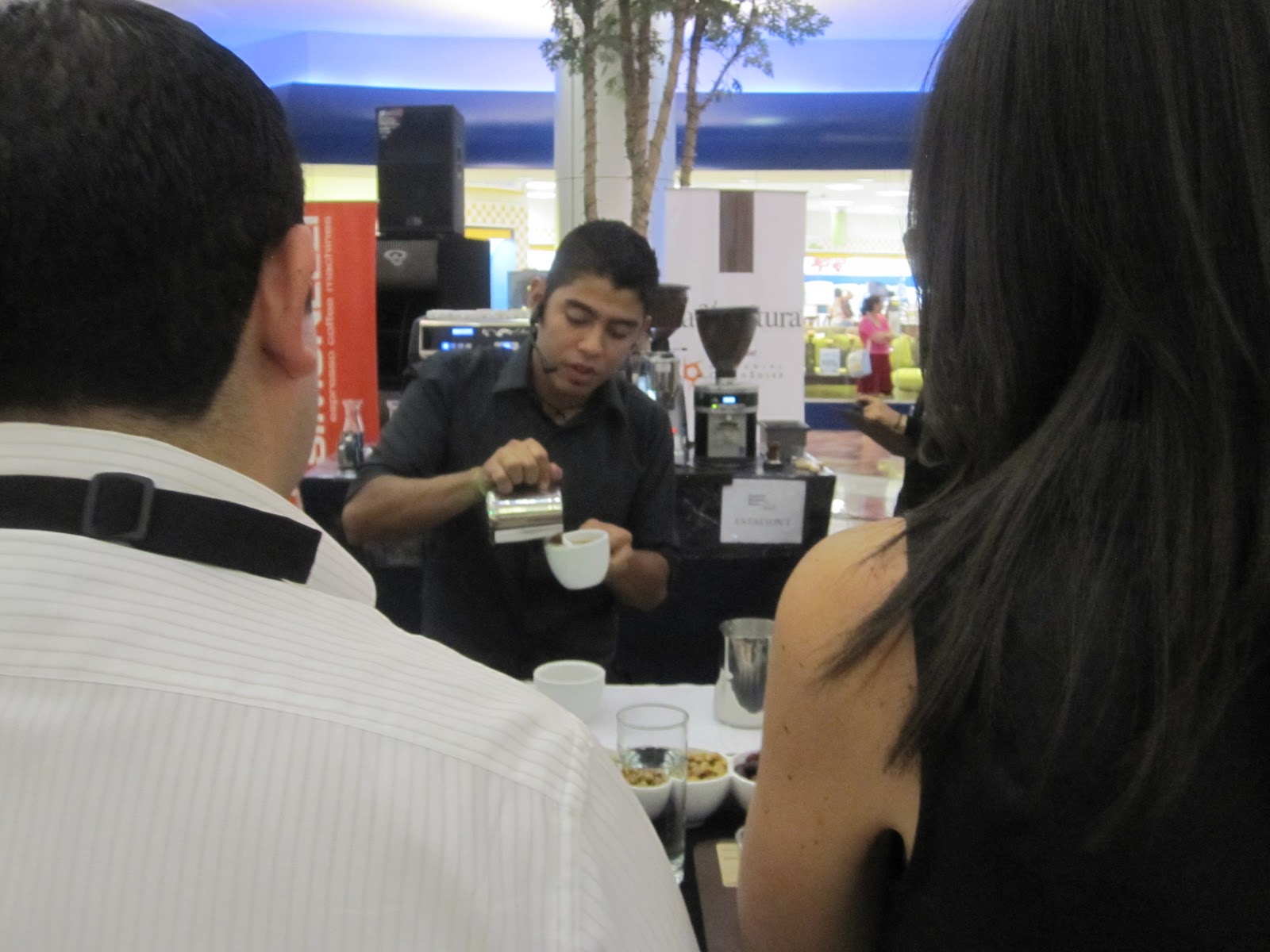
Depending on the coffee and depending on how it's brewed (as well as other factors), different coffees can actually look different. But it's a cupping competition and everyone is focused on tasting the coffees and using their palate to discern the differences.

Somewhere far away from America, the little nation of Greece is in jeopardy of defaulting on its debt and causing the destabilization of the Euro and perhaps the worldwide economy. Maybe it's inspiration by his nation but the Greek competitor in the cupping championship has just destabilized the legitimacy and credibility of the World Cup Tasting Championship.

Instead of actually tasting the coffees, the Greek competitor simply looked at the three samples and quickly discerned the sample that looked different without tasting. Evidently, he identified all of them correctly. He did this in the First Round, which landed him in the Semi-Finals where he did it again which propelled him to the Finals and, finally, as World Champion.

All without ever tasting any of the coffees.

I think that would have been the most entertaining coffee competition ever.

Saturday, June 18, 2011

Handmade Totalmente


Two bottles of Gahara Vanilla Syrup starting their journey.

So far, 2011 has been a busy year. I've been back and forth to Central and South America, as well as southern North America several times. My times at home have been short and it wasn't until last month when I actually had time to slow down and return to my roots, so to speak.

In May, I was home for 22 days. Time to slow down. Time to focus. Time to work. Time to re-connect with my baristas and get back to what we do best. People think I'm lucky because I am given the opportunity to travel. I think I'm lucky because I return to a great team focused on making fantastic products for our guests.

For the past couple of days, after recovering from the haze that was the World Barista Championship in Bogota, Colombia, I've been working in the bowels of Spro working with ingredients, tasting coffees and whipping up new batches of handmade this and that. I've been back on the farmers market circuit seeing what's new and available, and planning new menu items for the heat of summer.

It brings me back to the aspect of barista that I like the most: preparing everything handmade. I'm happy to say that nothing at Spro is commercially processed. We prepare everything in-house or work with purveyors who share our same passion for doing things "the hard way." From making the coffees individually to order to the handmade syrups to the traditionally made agua fresca to the quirky take on classic sorbets whipped up in the PacoJet. Everything is sourced thoughtfully and carefully. Everything is tasted and vetted before we present it to our guests.

I'm fortunate to have the opportunity to travel the world, work with baristas and judge barista competitions. I meet wonderful people and make incredible friends. But at the end of the day, I find myself inspired most by the very people I work day in and day out - the team at Spro.

Thursday, May 19, 2011

And Sometimes I Fail

I'm big on customer service and working to provide the guest with a great experience every time they visit one of our locations.

And sometimes I fail.

Yesterday, I failed in a major - looking like a complete asshole kind of way.

I've been running my own little company for twelve years now and I've made just about every customer service mistake one person could make. I've yelled at customers, argued with customers and kicked customers out - sometimes in a very fiery and spectacular fashion.

Maybe some of those times I was in the "right" on the matter and the customer/guest/visitor transgression was met with a commensurate response that could be completely justified - meaning that I was "right."

However, there has never been an incident where, after cooling down, thinking about it and analyzing the situation, I have ever felt that it truly was the right way to handle the matter and that I couldn't have responded better, and won out with aces.

The situation was this: I'm standing in a walkway chatting with a long-time guest whom I haven't seen in months when an elderly gentleman walks between us (there's about three feet between the guest and I). Instead of the usual convention of saying "excuse me", the elderly man gruffly tells me to get out of the way and makes a disparaging remark on my tummy. At first, I didn't catch his meaning but the snideness of his manner just tweaked me enough to press it a little farther.

Now, it's later in the day (about 4pm) and I had just come to the location to drop off some supplies after spending the morning at the roasteria repairing the roaster and the afternoon in the garden planting tomatoes. So, by this point, I'm looking pretty disheveled: my hair is messy, I'm wearing work boots and probably look slightly grimy from planting the garden. In other words, I look like a laborer.

I press the guy a little on his meaning and he still comes at me with the disparaging remarks. Usually, I don't let these kinds of people bother me but today, I'm in that mix of being tired and dirty from working and slightly irritated about a variety of things, meaning that when this guy comes at me, I lose perspective and become confrontational.

You know, why the guy didn't just do the polite thing and say "excuse me" or "excuse me, but you're in the way", I don't know. Maybe he was having a bad day or maybe he just thought that I was some (to his mind) piece of shit Hispanic laborer that didn't deserve the general respect and courtesy that he would give to other white people (I note this because the guest I had been talking to is white and the guy didn't address him and singled me out).

Whatever the case may be, it started out poorly and went all downhill from there.

Come to think of it, the guest and I were talking about the piss poor ways that the SCAA and WBC treats their volunteers and judges - a subject that always irritates me - and probably was the catalyst (on my end) for the degradation in handling the matter.

I don't remember the specifics but it wasn't pretty. I did not handle myself in the manner that I desired. I was the offended party who thought he deserved justice. Regardless of who was "right", I still ended up looking like an asshole. Not only to the elderly man without manners but, more importantly, to the other guests that were in the house at the time.

I'd like to think that I was justified. That I was "right." I stood up and didn't take prejudiced crap from some jerkoff. But in the end, like every time before, I don't feel that it was the "right" thing to do. I handled it poorly and engaged that elderly man in the manner that he engaged me. I didn't elevate the interaction. I didn't improve upon it. I helped degrade it. And that, to me, is a Failure.

I often talk about hospitality and leadership. That an environment of hospitality and quality can only be maintained if it is strongly demonstrated by the leadership. I'm embarrassed and ashamed that I failed so poorly and brilliantly as a leader during this incident. In front of staff, guests and passers-by. That kind of interaction can only give people a poor impression of who we are and what we are about.

Hospitality is easy when things are running smoothly and everyone is happy. The real test is when you're met with someone as grumpy and rude as that old man. Granted, I wasn't working the bar but anytime that I step into the scene, I should always be "on" and not running in cruise mode. What I should have done was dropped off the delivery and gotten the heck outta there. I had just come from working in the garden so I looked terrible (and probably smelled funky). I wasn't prepared for the "show" that we like to give to our guests.

I just hope that the next time I'm faced with a challenging guest, I'll have more clarity to handle the situation better.

Wednesday, April 06, 2011

Coffee Obsessive

I'm currently stuck in Mexico City after a mechanical problem with the airplane forced a two-hour delay, missing my window to connect on a flight back home to Baltimore. Granted, if I'm going to be "stuck" anywhere, Mexico City is about as ideal as it gets.

To my own surprise, this blog was mentioned in the article about me and my little company, Spro Coffee, in Baltimore. For those of you visiting us from the Washington Post: welcome.

I first was introduced to Martha Thomas about nine months ago in June 2010 where I received a phone call during my trip to London for the World Barista Championship. That's where the article you read in the Post all started. Over the next nine months, Martha and I would chat on a regular basis regarding the article and she came in several times to see just how we do what we do in our little shop in Hampden.

Martha joined us for a cupping with Joan & Ralph Gaston of Rusty's Hawaiian Ka'u Coffee where we sampled a range of coffees, including samples grown by Lorie Obra (Joan's Mom) - who is an amazing scientist turned coffee farmer on the Big Island. Martha later joined us in a demonstration on how we select a brewing method that "pairs" with a particular coffee. It seems that in the translation of the article, a little bit of both events were mixed together.

As with any article written over a long period of time, some details may have been a little jumbled with the passage of time. I wanted to take a moment to clarify some of the details:

- A visit to Anthony Rue's Volta Coffee & Tea in July 2009 was instrumental to the direction we decided to take Spro Hampden. Had it not been for Anthony, our approach of multiple brew methods throughout the day might not have happened. If anything, we might have ended up "cheating" like many shops in the country by batch brewing coffee during the morning "rush" instead of taking the time to prepare each cup by hand.

- Much of what we do is inspired by others. Almost nothing is truly original. From Ichiro Sekuguchi of Tokyo's Cafe de L'ambre to John Sanders of Origins Organic Coffee, Spike Gjerde of Woodberry Kitchen, Aki & Alex from Ideas In Food, and fellow baristas like John Lewis - all and more have had an impact on me and the way we approach and present our coffees.

- In the article I'm quoted as saying: "We have no loyalty to any one roaster." Honestly, I don't think I ever said that - especially since loyalty is something central to what we do and own approach to doing things. As a company, we're very loyal to our vendors. We maintain long-term relationships with all our vendors. A great example of this is Origins Organic Coffee. We've been buying their coffee since 2004.

What I did say is that we do not maintain roaster exclusivity with any one roaster. In the coffee business, the typical model is for a retail shop (like Spro) to purchase all their coffees from one coffee roaster. It's a limited way of doing business that is slowly eroding in these modern times (although one of our original six roasters, Counter Culture Coffee of Durham, NC recently told us that they would no longer sell to Spro for three reasons, one of which was that they were returning to the roaster exclusivity model).

Roaster exclusivity is simply ludicrous. It's akin to walking into your local pub and only finding one brand of beer or alcohol. We are unable to do business with companies that insist on roaster exclusivity and we're very appreciative of the companies who started with us and believed in supporting our approach - and those companies are:

Origins Organic Coffee - Vancouver, BC
Barefoot Coffee - San Jose, CA
Ecco Caffe - Santa Rosa, CA
Stumptown Coffee - Portland, OR & New York City
Intelligentsia Coffee - Chicago, IL

- In the article, Ryan Jensen (owner of Peregrine Espresso in Washington DC) cautions about claims of singularity. While our model of multiple roasters, multiple coffees paired to multiple brewing methods, made by hand, day-in and day-out, is still the only one in the industry, I certainly hope that this anomaly is short-lived.

Seriously, Spro Hampden can only make so many coffees per day and we can only impact a small segment of the coffee drinking public. For our notion of quality coffee prepared without compromise to be tasted by the larger public, more shops have to take our approach. We cannot and do not want to be the only kid on the block serving our kind of coffee.

However, to do what we do takes a certain level of commitment and skill. Ryan Jensen has both of those and with his opening of a second Peregrine in the coming months, I'm hoping we'll see a more in-depth approach to their coffee program - because I think he's the best coffee operator in The District.

- The article mentions my judging experience. While I have judged barista competitions across North America, Central & South America, as well as Africa, I have not judged a competition in England. My visit to London last summer ended up with me as a spokesperson for Reg Barber Enterprises during the World Barista Championship.

From 2004-2007, I served as a volunteer director on the Executive Council of the Barista Guild of America. I have also served as a volunteer for the United States Barista Championship regional competitions and as a volunteer trainer for the Specialty Coffee Association of America. And in three weeks, I will serve again as a volunteer panelist speaking on multiple brewing methods in a cafe environment at the SCAA's annual trade show in Houston. I will be one on a panel with Anthony Rue (Volta), John Piquet (Caffe D'Bolla), Kyle Glanville (Intelligentsia) and Tracy Allen (moderator).

So, despite my criticism of the SCAA, I'm still willing to support and help out when I feel that I can lend something of value.

Well, that's about all I have. It's humbling to be written about in the Washington Post and I'm truly honored, but much of the credit goes to the people around me. My staff of baristas are some of the best baristas I've ever known and worked with, they ply our craft with humility and honesty in an unassuming manner absent of pretense and condescension. My non-coffee friends and family keep me grounded. My mentor, John Sanders, who has been instrumental in my learning of coffee and sense of duty to get involved in our industry. And many thanks to my friends in and around the business, without whom I never would have done what we do.

And of course, thanks to Martha Thomas for noticing and taking interest in what we do to take it to the Post. She's been fun and easy to work with and I wish her the best in her writing career. Same goes to the editors, staff and Marvin the photographer from the Post. Always professional and always easy to work with.

Thanks to all of them and thanks also to you for reading the Washington Post article and then this lengthy blog post (btw, I write about more than just coffee here). I hope you'll find your way to visit our little shop in Baltimore (or at least your local specialty coffee purveyor) where we look forward to making you a cup of coffee in a manner we hope you will enjoy.

Best regards,

Jay
Mexico City
6 Abril 2011

Sunday, February 27, 2011

Campeonato de Baristas Nicaraguense, Finals


Ana calibrates with Claudia, Isaura and Juan Pablo.

It's finals time in Nicaragua and we're ready to go. The judges are ready, the competitors are ready and even the gathered public is ready and it's time to go.


A good turnout.


Coordinator Martha Zamora and Edwin Ruiz conference.


Juan Pablo, Indira and Isaura ready.


Everyone Loves Marisela.


Finals Judges: Rebeca Vergeli (s), Juan Pablo Oporta (s), Indira Aria (t), Isaura Zeledon (s), Ana Garcia (t), Claudia Lovo (s) and Yours Truly (h).


Head Judges' Scoresheet.


My signature preserved on the Champion's trophy.


For the Champion.


My lunch: chicken from Tip Top.


Everyone eats.


And eats.


And eats!

Saturday, February 19, 2011

Tucson Steak


Rob chats with Federico Bolanos.

In America, we say "too-sohn." In El Salvador, they say: "tuck son."

And so we found ourselves back at La Gran Via for steaks at Tucson Bar and Restaurant. Originally, we had been looking for a place to eat at MultiCentro but those restaurants were too damn noisy (and I really wanted to try the Thai place there).

When I'm going out to eat with friends, I like to talk with them - not yell over loud music.


Francisco and his novia.

The competition is over and now it's time to spend a little decompression time with the new champion: Alejandro Mendez and the owner of Viva Espresso, Federico Bolanos. Time to forget the past competition and start focusing on the World Barista Championship. Pick our collective brains, discuss coffee and continue friendships.

Meanwhile, I'm having a ribeye...


Alejandro, Rodrigo and Camilo.


Steak Condiments: salsa, chimichurri and ketchup.


My ribeye.

Campeonato Salvadoreno de Baristas, Los Finales


Guatemalan Barista Champion Jose de la Pena prepares a cappuccino for Judges Calibration.

To be honest, I probably could have judged the finals, but I certainly wasn't feeling 100% (more like 78%), and I had already named my alternate and Rob was going to Head Judge the finals. Originally we tossed a coin to determine the head judge slot but I really don't know why. I was going to let him do it regardless, mainly because I knew I would be head judging Nicaragua next week and it was important to him to head the finals. Add to that the fact that I was well on my way to being ill yesterday evening and I didn't want to judge the competitors unless I could give them my full 100%.

It's a good thing because all the judges were on top of their game and ready to do a great job.


Finals Head Judge Rob Tuttle reviews the calibration cappuccino.

Selecting the judges for the finals is a fun and curious exercise. I'm looking for the most consistent and most calibrated of our judging field. People who can evaluate quickly, consistently, fairly and to the rules. It's not an easy task - especially if it's your first time out, and we had some great people in the ranks.

The challenging part was the diversity of the competitors. Clearly, the most progressive performances were given by the Viva Espresso team. They were sharp and pushing the envelope. They've been involved in the El Salvador competitions for years and have paid very close attention to the trends in the progressive competitions around the world, like the USBC and the WBC. They signaled early on that they were going to push it to the limit and they didn't disappoint.


The Girls.

One of the most difficult things about judging is that you really don't want to field a team of judges that aren't qualified to assess the competitors they are evaluating. As a competitor in the United States, I've had that problem and I didn't want that to be the case here in El Salvador. For the finals, our judges had to be sharp and had to be on top of things. Going into the finals, I felt comfortable with our mix of experienced International Judges and national judges.

For lack of a better term, the more "advanced" competitors know the rules and they know the flow of the station with regards to their judges. They know what rules to exploit and which to burn. Some, like former WBC Sensory Judge Rodrigo Giammatei, will "play" with the judges to see if they are sharp enough to catch his nuances. It can be tricky work.


Jonathan Rodriguez does his thing.

But even experience as a WBC Judge doesn't guarantee you a win. Practice helps and the rumor was that Team Viva Espresso had been training for six months, with the last month dedicated solely to preparing for the championship.

Whether you're in the United States or at the World Barista Championship, the questions are always the same: why did those people win? Who do they know? Is the competition corrupted? And no doubt, those same questions would be posed here in El Salvador. It's the nature of the game.


Nice setup!

But when you're a judge, it's almost obvious. Those with the time and resources to practice and practice with focus and knowledge stand out. They don't necessarily win, but they stand out and increase their chances of winning tremendously.

In the end, the champion Alejandro Mendez was polished. Smooth, clean, confident and with a good disposition, as well as a very supportive company and team, I think he makes for a great champion to represent El Salvador at the World Barista Championship this June in Bogota.


The judges score espresso.


A large crowd supporting Viva Espresso.


Flor de Maria Gochez grinds coffee.


Creating Flor de Maria's signature drink.


Daniel Mendez aerating his espresso through a Venturi.


Tuttle watches.


Alejandro Mendez pouring cappuccinos tableside.


I think Rob is going stir-crazy.


Claudia wiped out.


The Sensory Judges calibrate.


Rodrigo Giammatei plays with his tech judges.


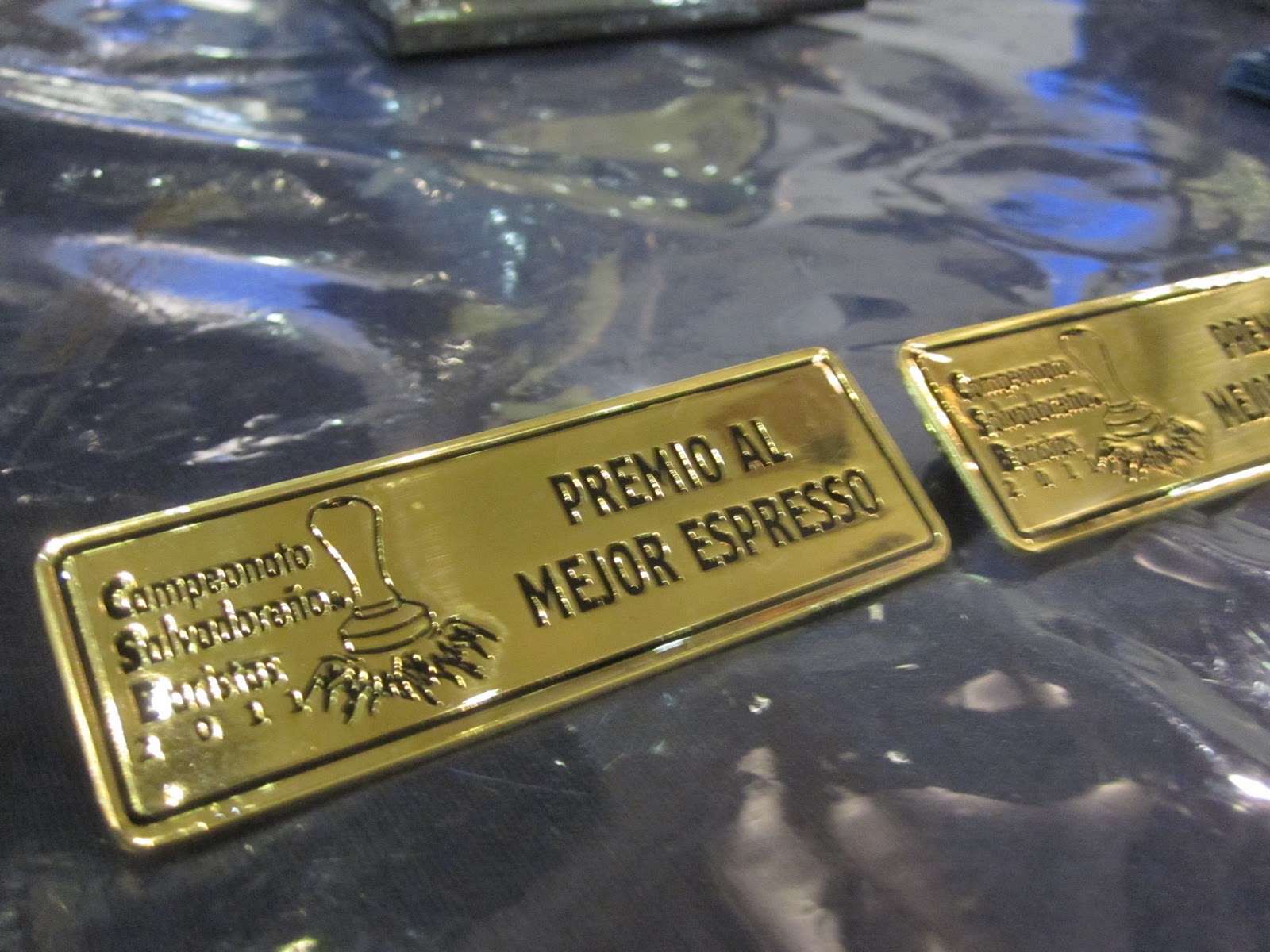
Pins for best drink categories. I like these.


Top Three Trophies.


Los resultados.


Alejandro with his trophy.


We stand with the new Barista Champion of El Salvador: Alejandro Mendez.