Thursday, February 17, 2011

Cocina Blanca


Open fire cookery.

Touring the coffee farm was cool but touring the kitchen was even better.

Through the semi-opened door in the main house, I noticed the orange glow from the burning embers in the traditional firepit. I had long known that they cooked like this in the Old World of the Philippines and had even toured museum houses that featured these kinds of kitchens, but I had never seen a working kitchen. I was excited.


Rat control.

The convenience of modern appliances means that one can precisely control the heat source, and with the advent of induction cookery, I can dial in a specific temperature and walk away. Could the same be done with open fire cooking? I had to see for myself.

Most houses in the Philippines come with a "regular" kitchen and a "dirty" kitchen. The "dirty" kitchen is the one where the household staff does the real work of preparing your meal and the "regular" kitchen is the one that your guests sees. Without a doubt, this is the "dirty" kitchen and the most notable thing about this kitchen is the layer of black soot covering everything above six feet. There's no exhaust fan or stainless vent to contain the smoke, it just goes everywhere and coats everything. Fifteen minutes in the kitchen and your clothes smell like you've been sitting too close to a campfire all night long.


El Comal or La Plancha.

Surprisingly, these cucineras are able to control the heat to boil or simmer as needed. This is the real wizardry of cooking. Mystical and magical, these women transform humble ingredients of corn, plantain and chicken into tantalizing traditional fare that most cooks only can dream about.

I'm enamored - and covered in soot...


Chicken.


All cooks like to hang their cookware.


The kitchen sink.


Preparing the elote.


Could be dinner...

Finca Casa Blanca


Camilo, Francisco and Rob in the back of the Dakota.

Those of us who tour the international judging circuit hear roughly the same thing: "Wow, you're so lucky to see the world." And indeed we are lucky. However, the greatest irony that we joke about constantly is that we get to see the "greatest convention centers of the world."

Everywhere we go, we're typically ensconced in air conditioned comfort, away from the sunlight, in some concrete bunker known as a convention center where we quietly ply our trade of evaluating barista performances, technique and beverage quality. Our hosts are always welcoming, gracious, accommodating and take very good care of us. And since most of us actually work a real job, we must return to our "real lives" as soon as possible. This means that we usually don't get to see sights that "regular" people visiting that nation get to see.


Those guys are armed.

Which is why we're more excited than usual to get up at 6am to set out for a visit to Ana Elena Escalante's Finca Casa Blanca. With Angel at the wheel of our USAID funded Dodge Dakota pickup, we slowly make our way out of San Salvador and along the highway to Ahuachapan, along the Guatemalan border.

We're piled into the vehicle, where the privilege of tummy affords me the shotgun seat as we pass the Salvadorean countryside filled with bananas, coffee, papaya and more. It's beautiful countryside and I can see why so many visitors (including Andy Newbom) want to move here.


New seedlings cultivated for replenishment.

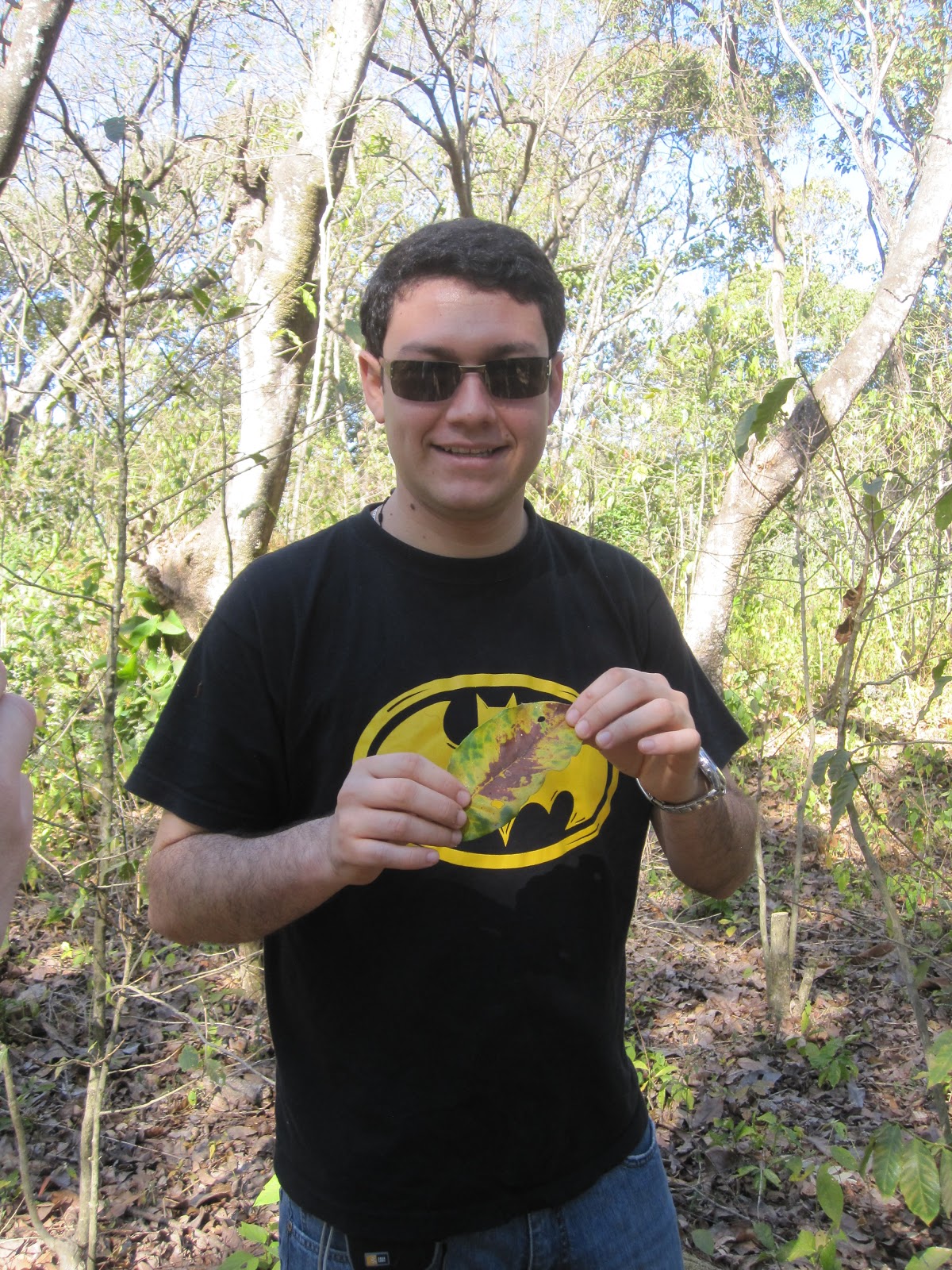
The problem with Finca Casa Blanca is that it has been severely hit by the Roya fungus - that yellow rust that destroys coffee trees like a cancer. Everywhere you turn on the finca you can see the devastating effects that the Roya has inflicted here. Camilo spies a few trees from Colombia that are resistant to the effects of Roya but most of the farm has been impacted.

The finca is a great farm to visit because it's so different that the lauded farms that you read about receiving high dollar from the roaster darlings of America. This is a working coffee farm. A farm that plies its' trade based on the C Market in New York City. In other words, this is the true Salt of the Earth coffee farm.


A hallucinogenic among the trees.

Aside from the immaculate stacks of firewood and the neat rows of seedlings, everything about Casa Blanca seems a little herky jerky. The beat up coffee trees are surrounded by vegetation, owing to the organic approach being done here, and the Spanish-style buildings are well past their grand days.

But the drying patios are dry and the machinery still works and everything is done on-site. From seed to green, the entire process is handled right here at the farm and we have the opportunity to see the dry milling in action.


Camilo and the Roya.


New coffee just getting started.


More seedlings.


Angel amongst the trees.


The main house.


The wet mill.


In parchment.


Through the dry mill.


Mechanical sorting.


In parchment.


Now green.


The drying beds.

Wednesday, February 16, 2011

Faisca do Brasil


Rob in the back of the Dakota.

Lately, after a recent disappointing experience at Fogo de Chao, I haven't been one to opt for Brazilian churrascaria, but when Paola and Diego said they wanted to take us to the one at the Inter-Continental, I thought I'd give it a try once more. And I'm glad I did.

Unlike the Fogo de Chao in Baltimore, Faisca do Brasil is actually pretty darn good. An extensive "salad bar" filled with sushi, raw fish, veggies, fruit, starches and an array of ceviche - already it was off to a good start, even though we had spent waiting over an hour for our 8pm reservation. Evidently, reservations mean mierda in Salvador - even if you have a group of eight and a reservation at a storied hotel.


Rob, Paola and Francisco getting hungry.

By the time we sat at the table, we were starving. No need to debate on whether to turn the card over or not - it was "green" all the way baby! And keep it coming!

While Diego advocated the grilled pineapple (stellar) and Paola pushed for the extrana (fatty, juicy and flavorful skirt steak), I found the combination of the extrana and the fresh water lobster to be the winner. Succulent and explosive flavored steak and the delicate tenderness of the lobster tail. If only I had a bowl of white rice, no meal could have been finer!


A first round of eats.


Paola and the grilled pineapple.


Rob and Francisco mid-meal.


Camilo keeping up his own end.

Beating Up Judges, Estilo de Salvadoreno!


Buenos Dias, Children! And welcome to Hell!!!

I've been involved with training national judges in some form or another since I started judging in 2007. First in Ethiopia, then in Mexico, Central America, South America and then full-circle this season back to Africa when I was recruited to be the head judge for Uganda and in charge of everything.

Working with people really is what I enjoy the most. It's difficult, challenging, frustrating and ultimately, very rewarding. Since most of my judging work is within the "underdog" countries - those nations who's champions aren't the media darlings of the barista world for a variety of reasons.


Senor Tuttle talks the Science.

Since the beginning, the World Barista Championship has been dominated by the, well, "White Countries". Those nations with a predominantly white populace and Western disposition: Norway, Australia, UK and now, the United States. Other nations have come close (Guatemala, 2nd place 2010) but still no cigar.

What's exciting for me is working in these barista developing nations and seeing their coffee culture develop and prosper. Maybe we can help nudge their coffee programs and championships to the World Crown, and that would be very exciting indeed.

In fact, it was actually more exciting to see Guatemala capture 2nd place than the actual champion - no offense, Mike.


We judge together. We eat together.

Once again, competition is in full swing and I'm back in Central America doing my thing - although this time it's without the safety net that has been Roukiat Delrue, Scott Conary, Brent Fortune, Jose Arreola or John Sanders. Working as a junior judge to them meant that I could kinda cruise along in the background, comfortable that all the Ts have been crossed and all the Is dotted. Like in Africa, a couple months ago, if those items aren't crossed or dotted it's because of my mockup and no one else's. The pressure is pretty intense.

Unlike Africa, where I was a solo performance, I've got some backup here in El Salvador: Camilo Galvis, whom I worked with judging Colombia back in October, Francisco Palarea, that wild and crazy BMW driving magazine publisher from Guatemala and the astute and experienced USBC judge Rob Tuttle from Atlanta.


Pollo a la Parilla.

Rob is working alongside me as the other Head Judge for the event. It's good to have him along because his near-exclusive USBC/WBC experience means that he's seen some of the most advanced and cutting edge barista presentations on the planet, which will give greater depth and breadth to our training and judging for the event.

As with other places I've judged, the candidates here in San Salvador are interested and passionate about coffee. They want to know more and we want to engage them, push then and challenge them. The difficult part is that we're here to push everyone to the world level. Meaning that when our teams of judges give a score of "5" to a competitor in El Salvador, that "5" is equivalent to a "5" in the WBC. It does absolutely no good for anyone if a "5" in El Salvador (or any nation) translates into a "2" at the WBC.


Judges ready to pounce!

So, with the generous support of the Consejo, we push, prod, bully, intimidate and do whatever we can to help our field of judges learn, and more importuntly, understand just what are the differences between a "2" and a "5" or even what it takes to earn a "6" - which, for the uninitiated is "extraordinary" and the highest score a judge can give a competitor.

I think it's safe to say that every judge I know has experienced this, but we try to remind our team that there are no rewards for being the "toughest" judge on the panel. Record what you see and award points accordingly. Reward the barista competitor as much as you can, don't penalize them.

It's going to be a fun week!


Sensory tasting - you'd better know your palate.


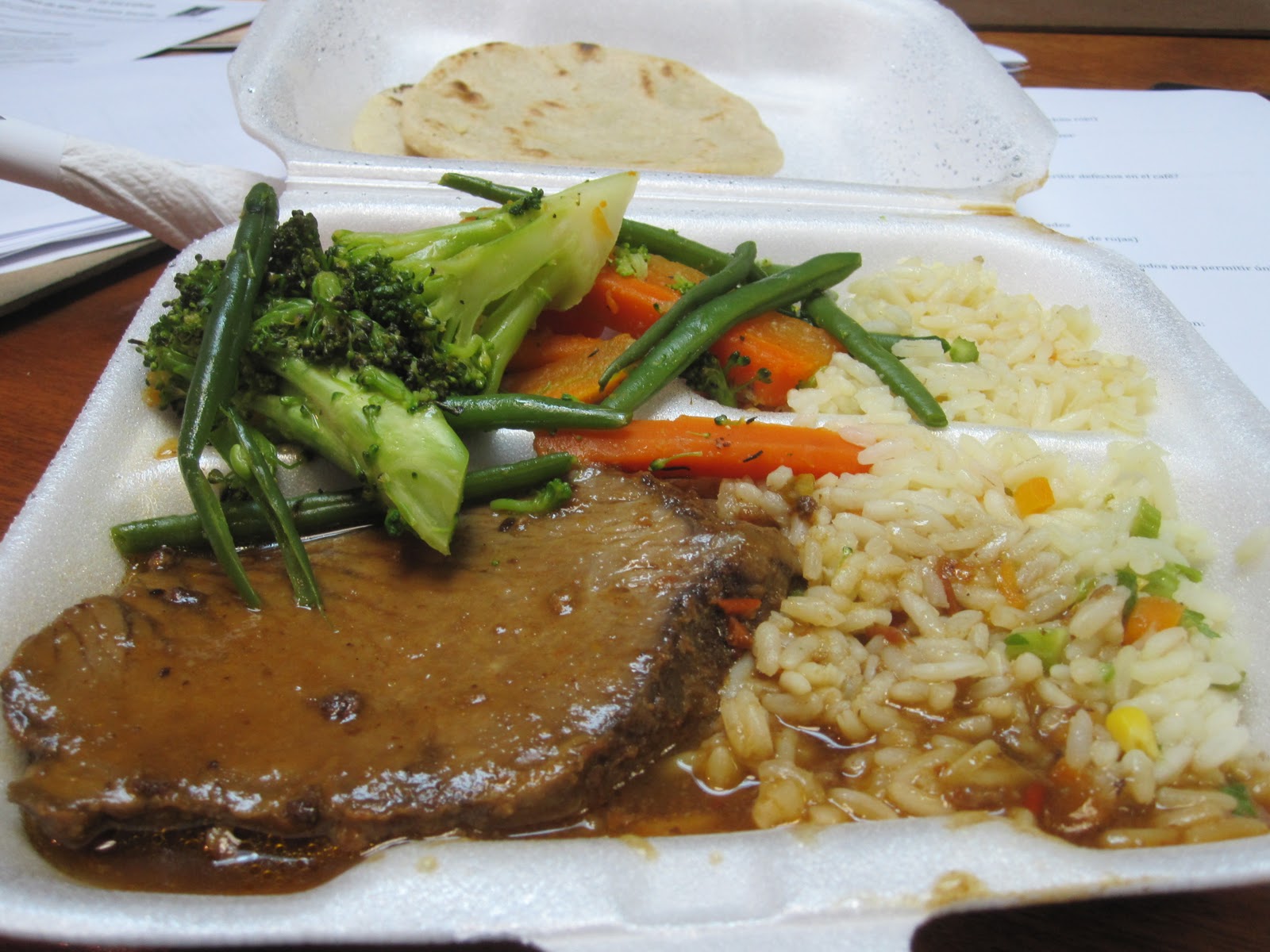
Tipico Salvadoreno - grilled beef.


Being tested: Mauricio, Anny and Claudia.


Guest barista Delmy makes espresso.


Demly, on load from Viva Espresso, making small talk.


Final evaluations.

Examen Salvadoreno


The judge candidates begin their written journey.

Tuesday, February 15, 2011

Mary Restaurant


Firing the conchas on the plancha.

The first time I told my friend from Argentina that I liked conchas, he started laughing hysterically. Evidently in Argentina, conchas mean something completely different than the sugar-topped pan dulce they are in Mexico.

So when Paola asked me if I would like to eat conchas here in El Salvador, I wasn't quite sure what she was asking me. Did she know of my fondness for Mexican conchas from this blog? Or somehow know about my fondness of Argentinian conchas? I was afraid to ask!


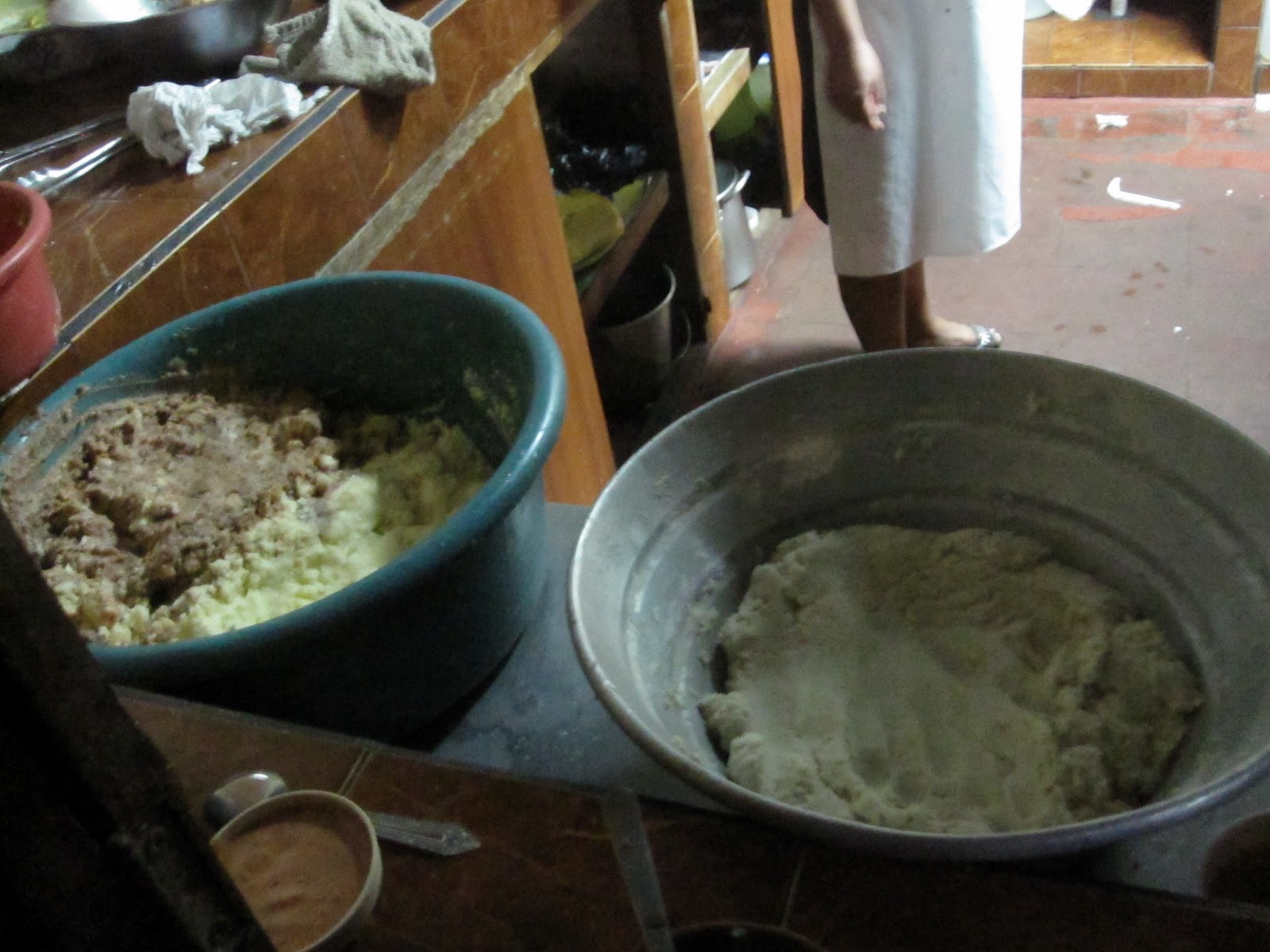
Ingredients for the pupusas.

Turns out here in El Salvador, conchas are little, tiny shellfish - mollusk type creatures. For awhile, I though she meant conch (which I am fond of) but she described it as small, which eliminated the conch.
High above San Salvador and up a windy, switchback road is the restaurant known as Mary. Famous for their pupusas of cheese and frijoles refritos, they are also known for the special way they prepare conchas. In garlic and butter and cooked on top of a plancha.


A plateful of conchas with ajo and butter.

As the plateful (the first of multiples) landed on our table, I knew exactly what these little conchas were. In Hawaii, we call them 'Opihi and eat them raw. Delicious and salty little mollusks that cling to surf rocks and must be harvested by hand. I did a little harvesting when I lived in Honolulu - it's difficult but rewarding work.

And these conchas were delicious. Paola is wildly enthusiastic about the conchas and now we know why. Flavored with garlic and butter, they're placed on a hot plancha where they cook until they boil off. The texture is tender and chewy with just a hint of salt and the rich buttery goodness of garlic. Unbelievable. We consumed a good four platters of conchas.


Oooh, la la!

Next up, were the pupusas. Balls of maseca with refried beans and cheese rolled out flat and cooked on the plancha. Tasty and boiling hot. Top with some spicy pickled vegetables and salsa rojo and you've got a messy but tasty meal. Guzzle down some beer (or in my case Coke Zero) and you're really living up high above San Salvador.


Pupusas!


< Pickled veggies and salsa rojo.


Camilo, Diego and Paola discuss the finer points of Conchas.

Eating Loroco


Fresh Loroco and Paola - in the grocery section!

Perusing the aisles of the local supermarket, I spied a bag of tortilla chips and asked Paola what she thought of them. Good, but only with dip. Hmmm, maybe that can of Frito-Lay Nacho Cheese dip but that seemed a bit wrong when in a place such as El Salvador. Paola's answer: Loroco Sour Cream dip.

Loroco? What is this Loroco? No one seemed to know. But here in El Salvador, it's wildly popular and they even sell it in the vegetable section. A visit to Wikipedia was sure to identify it as something well-known in America, but no - nada. Just some herb that's popular in this part of the world.


Loroco dip - pretty darn good.

In the dip, it's oddly familiar and quite tasty. In fact, I scarfed down half the tub and half the bag of chips. Paired with Coke Zero and it's a snacktime winner.

But I still have not real concept of what this Loroco really is...